
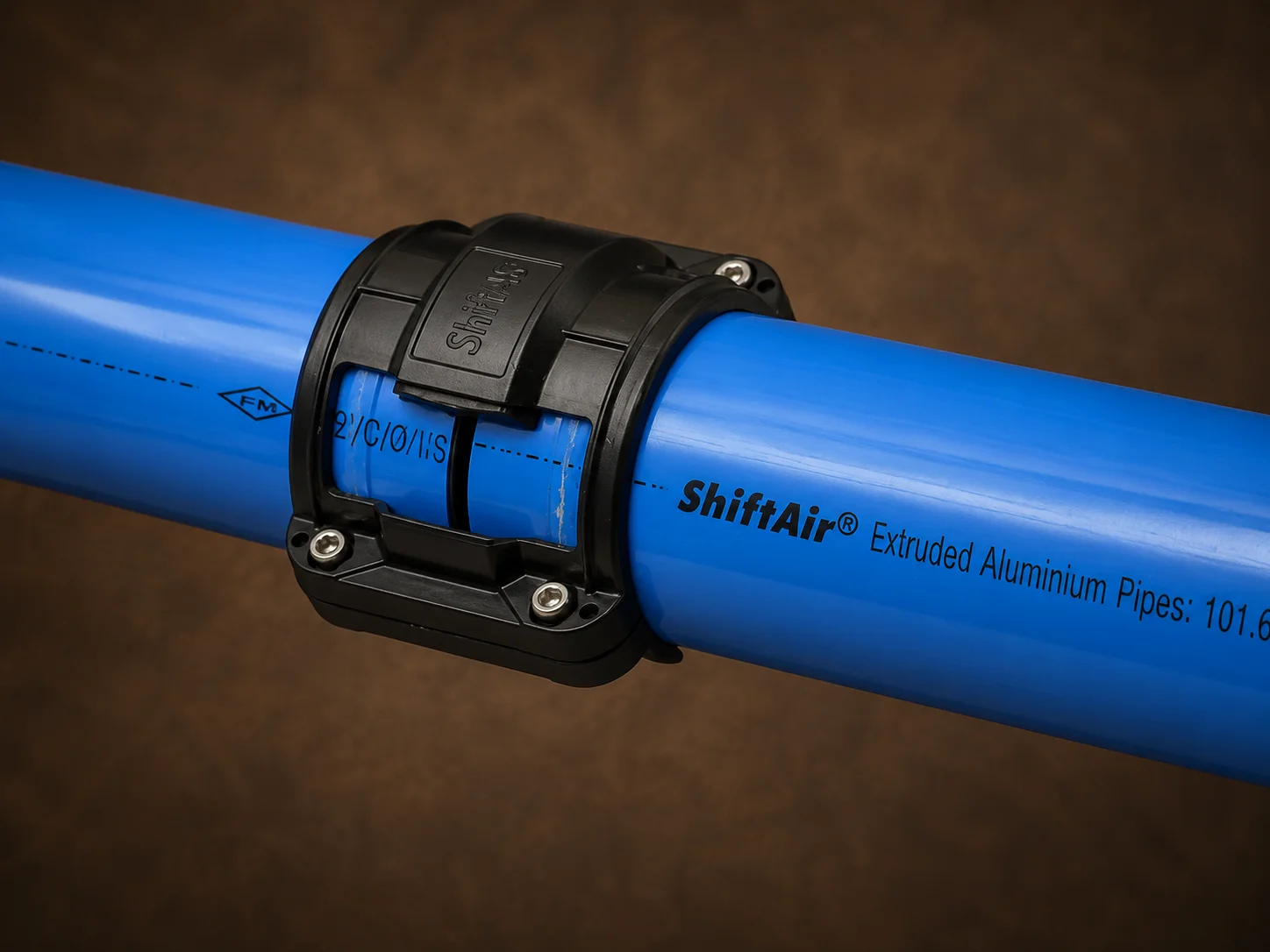
The cost of installing a compressed air piping system in India cannot be calculated accurately from pipeline length alone. Pipe diameter, airflow, operating pressure, fittings, valves, machine drops, installation height and factory conditions all influence the final price. A 200-metre straight pipeline with limited branches may cost less to install than a 120-metre network containing several bends, elevated sections and multiple machine connections. There is therefore no universal compressed air piping installation rate in India. The final price should be calculated from an approved design and bill of quantities. Total project cost = pipes + fittings + valves + machine drops + supports + installation + access equipment + testing + logistics + applicable taxes Pricing disclaimer: This guide explains the cost-estimation process for industrial projects. It does not provide a fixed price per metre. Material rates and installation costs vary according to specifications, location and site conditions. Contents Main cost factors Why per-metre pricing misleads Project cost components Aluminium vs GI Preparing a budget Bill of quantities Quotation requirements Comparing quotations Controlling cost FAQs What Determines Compressed Air Piping Installation Cost? Cost factor Why it affects the price Pipe diameter Larger pipes and fittings require more material. Pipeline length Determines the quantity of pipe and supports. Airflow requirement Influences the required pipe diameter. Working pressure Affects system and component selection. Machine drops Each drop requires pipe, fittings, valves and labour. Bends and branches Increase fitting quantities and installation time. Installation height May require scaffolding or lifting equipment. Factory condition Operating factories require additional coordination. Testing Pressure and leakage checks add to project scope. Future expansion May require additional capacity and connection points. Before finalising a diameter, use ShiftAir’s compressed air pressure-drop calculator for a preliminary assessment. Final sizing should still be reviewed against actual plant conditions. Why Cost per Metre Can Be Misleading A per-metre rate can offer a basic reference for straight pipe, but it does not represent the complete installed network. Compare two hypothetical projects: Project A Project B 200 metres, accessible route, eight drops, limited fittings and installation in a new factory. 200 metres, thirty drops, multiple branches, elevated routing and work during planned shutdowns. Project B requires more fittings, valves, supports, manpower, access equipment and installation time. Quotations should therefore be based on an approved bill of quantities rather than only a running-metre rate. Components That Build the Final Project Cost 1. Aluminium pipes Pipe cost depends on diameter, wall thickness, aluminium specification, pressure rating, surface treatment and quantity. A network may use larger pipes for the main header, intermediate sizes for departmental branches and smaller pipes for machine drops. Explore ShiftAir’s aluminium pipes, fittings, valves and installation accessories. 2. Fittings and connectors Straight connectors, elbows, tees, reducers, end caps, threaded adaptors, flanges and outlet blocks can represent a meaningful part of the budget. A congested route normally requires more directional changes. Efficient planning helps control material cost and pressure loss. 3. Isolation valves Valves allow individual production areas or machine groups to be isolated without depressurising the complete network. They may be required at compressor outlets, headers, ring-main sections, branches and future expansion points. Quantity should be based on operational and maintenance needs, not price alone. 4. Machine drops A machine drop may include a branch connection, vertical pipe, isolation valve, outlet fitting, flexible connection, regulator, drain arrangement and supports. The number and design of drops can materially change the final quotation. 5. Clamps, brackets and supports Support requirements depend on diameter, routing, recommended spacing, building structure, vibration and height. Confirm whether clamps, brackets, threaded rods, channels and fasteners are included. Heavy structural fabrication or civil work may be separate. 6. Installation labour and access Labour cost changes with accessibility, height, fitting count, safety procedures, working hours and shutdown restrictions. Elevated routes may need scaffolding, scissor lifts or boom lifts. Read the common compressed air piping installation mistakes before approving execution. 7. Testing, commissioning and logistics The scope may include visual joint inspection, pressure testing, leak inspection, valve checks, alignment review, handover, transportation, unloading, travel and accommodation. Each item should be clearly included or excluded in the commercial offer. Aluminium vs GI: Cost Considerations Cost consideration Modular aluminium Traditional GI Initial material price Generally higher Generally lower Pipe weight Lightweight Heavy Cutting and threading Usually minimised Commonly required Hot work Generally avoided May be required depending on method Installation speed Generally faster Generally slower Internal corrosion Corrosion-resistant Can occur over time Future changes Comparatively easier More labour-intensive Maintenance Potentially lower when correctly installed and operated May increase as the system ages For a deeper technical comparison, read aluminium versus an old GI compressed air network and the benefits of aluminium compressed air pipe. How to Prepare a Preliminary Project Budget Material: pipes by diameter, connectors, elbows, tees, reducers, valves, flanges and drop components. Mounting: clamps, brackets, rods, channels, fasteners and structural supports. Installation: labour, supervision, tools, assembly, route marking and coordination. Site requirements: scaffolding, lifting equipment, safety, transport, unloading and storage. Completion: pressure testing, leakage inspection, commissioning, documentation and taxes. A reasonable contingency may be considered for unidentified site conditions or formally approved changes in scope. Example Bill of Quantities Item Specification Quantity Unit Unit rate Amount Aluminium pipe Diameter and pressure rating — Metre — — Connectors and elbows According to pipe size — Number — — Equal/reducing tees According to design — Number — — Isolation valves According to pipe size — Number — — Machine drops According to outlet design — Number — — Clamps and supports According to support plan — Number — — Installation Approved system — Job — — Testing Installed network — Job — — Transportation Project location — Job — — Information Required for an Accurate Quotation Plant location and factory layout Compressor capacity and operating pressure Required pressure at points of use Required airflow in CFM or another specified unit Approximate pipeline length Number and location of machines and drops Approximate installation height Existing network details, where applicable Future production expansion Completion date, permitted
New Aluminium Compressed Air Network vs Repairing an Old GI Network: Which Saves More Money?
Many factories continue operating compressed air distribution systems that were installed years or even decades ago. In many cases, these systems use galvanised iron, commonly called GI, with threaded joints, multiple repaired sections and production branches added gradually over time. An old GI network may still appear serviceable from the outside. However, internal corrosion, scale, restricted pipe diameter, ageing joints and repeated modifications can increase pressure loss and leakage. Maintenance teams may repair one section only to discover another leak a few weeks later. At this point, factory managers face an important decision: should they continue repairing the existing GI compressed air network, or invest in a new aluminium compressed air piping system? The answer cannot be based only on the cost of pipe and fittings. A proper comparison should include electricity consumption, pressure stability, leak frequency, production downtime, air quality, maintenance labour and future expansion. This guide compares both options and explains when repairing GI may still be reasonable and when a new aluminium network may provide better long-term value. Table of Contents Why old GI compressed air networks deteriorate What is an aluminium compressed air network? GI vs aluminium compressed air piping Initial cost vs lifetime cost Pressure drop and compressor energy use Corrosion and compressed air quality Leakage and joint reliability Installation time and production disruption Long-term maintenance requirements Expansion and factory layout changes When repairing GI still makes sense When aluminium replacement makes sense Can the network be replaced in phases? Practical cost-comparison example Factory evaluation checklist Making the final decision Frequently asked questions Why Old GI Compressed Air Networks Become Expensive GI piping was widely used in industrial compressed air systems because it was available, familiar to installers and mechanically strong. A correctly designed and maintained GI network can operate for many years. Problems usually develop as the system ages, especially where moisture is present and the network has been modified repeatedly. Compressed air contains water vapour. As the air cools, this vapour may condense inside pipes. Air dryers, moisture separators and automatic drains reduce the amount of water entering the distribution system, but older installations may have inadequate treatment, failed drains or poorly arranged pipe slopes. Moisture can contribute to internal corrosion. Over time, corrosion products and scale may create a rough internal surface. This increases resistance to airflow and can reduce the effective internal diameter of the pipe. The network may also contain old threaded joints, sealants, reducers and repaired sections. Every additional fitting introduces another potential leak point and another restriction. Common signs of an ageing GI compressed air network include: Recurring leaks at threaded connections Visible rust around joints and low points Pressure loss at distant machines Rust particles in filters or equipment Frequent pipe patching and section replacement Multiple unused branches left pressurised Different pipe sizes added without a system plan Production areas supplied through long temporary hoses Increasing compressor pressure to maintain machine performance A Working Pipe Is Not Always an Efficient Pipe An old GI pipe may still hold pressure, but that does not mean it is delivering air efficiently. Internal restrictions, leakage and pressure drop can increase operating costs without causing an obvious pipe failure. What Is an Aluminium Compressed Air Network? An aluminium compressed air network uses lightweight, corrosion-resistant aluminium pipes with modular fittings designed specifically for compressed air distribution. Depending on the product system, the installation may use compression, push-fit or mechanically secured fittings. The pipe is typically cut to length, deburred, inserted into the fitting and secured according to the manufacturer’s instructions. Aluminium systems are often installed as organised ring mains with clearly planned branches, isolation valves, drops and future expansion points. Typical benefits include: Smooth internal pipe surface Resistance to internal rust Lower weight than traditional steel piping Faster cutting and assembly Cleaner installation without extensive threading Convenient modification and expansion Professional appearance and easier line identification Reduced need for painting in many environments Aluminium piping is not automatically efficient simply because of the material. The network must still be correctly sized, routed, supported, drained and commissioned. GI vs Aluminium Compressed Air Piping: Key Differences Comparison of an Ageing GI Network and a New Aluminium Network Factor Old GI Network New Aluminium Network Internal corrosion May increase with age, moisture and poor drainage Aluminium is resistant to internal rust Internal surface May become rough due to corrosion and scale Smooth internal bore supports efficient airflow Pipe weight Heavy and labour-intensive to handle Lightweight and easier to position Joint type Often threaded, sealed or welded in sections Modular fittings designed for faster assembly Leak risk Can increase as joints age and vibration affects connections Can be lower when installed correctly and inspected regularly Installation speed Cutting, threading and heavy handling can take longer Cutting and modular assembly can reduce installation time Maintenance May require repeated repairs, painting and section replacement Generally lower maintenance, with periodic inspection still required Expansion Can require threading, welding or extensive shutdowns Usually easier to extend with compatible modular components Air cleanliness Rust particles may affect filters and equipment No internal rust from the aluminium pipe itself Initial cost Local repair may appear inexpensive Full replacement requires higher initial investment Lifetime value Can become expensive if leaks and repairs continue May provide better value through reduced maintenance and pressure loss Initial Cost vs Lifetime Cost Repairing an old GI pipe usually has a lower immediate cost than replacing an entire compressed air network. A factory may repair a leaking tee, replace a damaged section or reseal several joints without making a large capital investment. The problem arises when the repair is treated as a permanent solution even though deterioration is spread across the network. A low-cost repair may restore pressure temporarily, but the factory may continue paying for leakage, pressure drop, maintenance labour, production stoppages and higher compressor pressure. A new aluminium compressed air network requires a higher initial investment. However, the comparison should be made using total lifecycle cost rather than purchase price alone. The lifecycle comparison should
How Much Do Compressed Air Leaks Cost a Factory?
Compressed air leaks are easy to ignore because the lost air is invisible and often hidden by normal factory noise. However, every leak is a continuous, non-productive user of compressed air. The factory pays to compress, cool, dry, filter and distribute air that escapes before performing any useful work. For many industrial facilities, compressed air leakage is an avoidable expense worth several lakhs of rupees every year. According to compressed air guidance from the U.S. Department of Energy, leaks can waste approximately 20% to 30% of compressor output in poorly maintained systems. A well-maintained system should generally keep leakage within approximately 5% to 10% of total airflow. Understanding the true cost of compressed air leaks allows plant managers to prioritise maintenance, reduce electricity consumption, stabilise pressure and avoid unnecessary investment in additional compressor capacity. Table of Contents How much can compressed air leaks cost? Why is compressed air expensive? Estimated compressed air leak cost by size How to calculate your factory’s actual leak cost Hidden costs beyond electricity Where compressed air leaks usually occur How to detect, repair and verify leaks How better piping reduces recurring losses Frequently asked questions How Much Can Compressed Air Leaks Cost a Factory? The financial impact depends on the volume of escaping air, operating pressure, compressor efficiency, annual running hours and electricity tariff. A smaller workshop may lose tens of thousands of rupees annually, while a multi-shift manufacturing plant with several compressors may lose several lakhs or even crores over time. Consider a compressed air station drawing an average of 100 kW and operating for 8,000 hours each year. At an illustrative electricity cost of ₹10 per kWh, the station’s annual energy expense would be: 100 kW × 8,000 hours × ₹10 per kWh = ₹80,00,000 per year If compressed air leakage represents 20% of the system’s demand, a preliminary estimate places the associated energy cost near ₹16 lakh annually. If leakage reaches 30%, the cost may approach ₹24 lakh annually. Important Calculation Note This is a first-pass screening estimate rather than a final energy-audit result. Compressor input power may not fall in direct proportion to the reduction in compressed air demand. Compressor controls, operating schedules, unloaded running and sequencing must also be adjusted after leak repairs to convert lower airflow demand into measurable electricity savings. Why Is Compressed Air So Expensive? Compressed air may appear free because it is generated inside the factory, but it is one of the plant’s most energy-intensive utilities. Electricity is required to draw in atmospheric air, compress it to a higher pressure, remove heat and moisture, filter contamination and deliver the treated air through the distribution network. U.S. Department of Energy guidance states that compressed air generation can account for approximately 10% of electricity consumption in a typical industrial facility and 30% or more in certain plants. Overall compressed air system efficiency can also be extremely low because much of the original electrical energy is converted into heat rather than useful pneumatic work. A leak wastes more than compressor electricity. It also increases the operating load placed on aftercoolers, air dryers, filters, drains and distribution equipment. The factory therefore spends money generating and treating air that creates no productive output. Leakage increases with pressure and opening size. Under comparable conditions, airflow through an opening is proportional to the square of its diameter. A hole that is twice as wide may therefore lose approximately four times as much compressed air. This is one reason increasing compressor pressure is rarely the correct first response to low pressure at a machine. Higher pressure may temporarily mask a distribution problem, but it also increases the volume of air escaping through every existing leak. Estimated Compressed Air Leak Cost by Size The following table provides an India-focused cost example based on typical compressed air leakage data at approximately 100 psig, or 6.9 bar. The example assumes: A sharp-edged equivalent opening Compressor specific power of 0.18 kW per cfm Electricity priced at ₹10 per kWh The leaking section remains pressurised for either 4,000 or 8,000 hours annually Illustrative Annual Cost of Compressed Air Leaks Approximate Leak Diameter Wasted Airflow Wasted Power Cost at 4,000 Hours Cost at 8,000 Hours 0.8 mm 0.95 cfm 0.17 kW Approximately ₹6,800 Approximately ₹13,600 1.6 mm 3.85 cfm 0.69 kW Approximately ₹27,700 Approximately ₹55,400 3.2 mm 15.38 cfm 2.77 kW Approximately ₹1.11 lakh Approximately ₹2.22 lakh 6.4 mm 61.55 cfm 11.08 kW Approximately ₹4.43 lakh Approximately ₹8.86 lakh Disclaimer: These figures are illustrative. Actual leakage cost will vary according to system pressure, opening shape, compressor performance, control method, operating schedule and electricity tariff. Demand charges may increase the total financial impact. The table demonstrates why large leaks should be prioritised. One 6.4 mm equivalent opening can cost more than dozens of pinhole leaks. In many factories, a relatively small number of large leaks account for most of the avoidable compressed air expense. How to Calculate Your Factory’s Actual Compressed Air Leak Cost The most practical calculation uses measured leakage flow and the actual efficiency of the compressor station. Annual leak cost = Leakage flow × Specific power × Operating hours × Electricity rate The required inputs are: Leakage flow: The total amount of escaping compressed air, normally measured in cfm, m³/min or Nm³/min. Specific power: The amount of electrical power required to produce one unit of compressed air flow. Operating hours: The total number of hours during which the leaking line remains pressurised. Electricity rate: The factory’s blended electricity cost per kilowatt-hour. Example Compressed Air Leak Calculation Suppose a compressed air survey identifies: 40 cfm of total leakage Compressor specific power of 0.18 kW per cfm 6,000 annual operating hours Electricity cost of ₹9 per kWh 40 cfm × 0.18 kW per cfm × 6,000 hours × ₹9 per kWh Estimated annual compressed air leakage cost: ₹3,88,800 For a more accurate result, use the measured compressor input power and delivered airflow rather than a general specific-power assumption. The calculation should also include non-production hours. A factory may stop
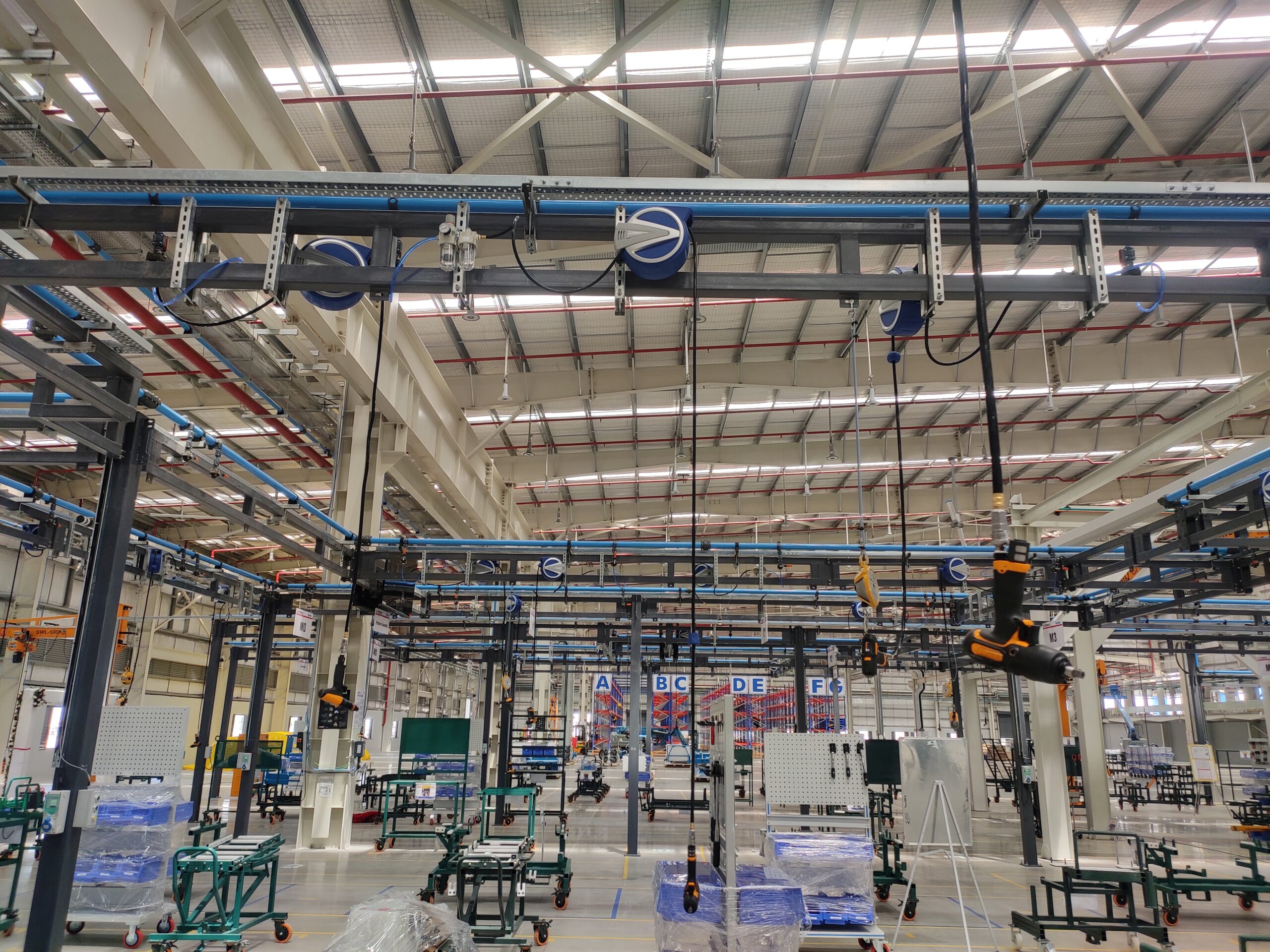
Aluminium Compressed Air Pipe: Benefits for Reliable Industrial Air Distribution
In most factories, compressed air is treated as a utility, expected to be available on demand. Factories often neglect piping networks until problems arise, despite maintaining compressors and major components. For instance, even with normal compressor operation and inconsistent supply at distant machines, one might increase pressure or investigate leaks, yet minor interruptions persist. The problem is usually with the distribution line, not the compressor. Aluminium compressed air pipe systems offer multiple important benefits for industrial users. Compared with traditional GI, MS, or black-iron piping, aluminium provides a cleaner and more flexible air distribution network. Its main advantages include resistance to internal rust, easier installation, future expansion capability, lower maintenance requirements, and healthier air delivery. When comparing aluminium compressed air pipes in India, consider cost per metre, installation time, corrosion risk, leakage, future expansion, air cleanliness, and long-term maintenance. Why Aluminium Is Used in Compressed Air Piping Moisture is common in compressed air piping. Even with dryers, poor maintenance or high humidity introduces water that, within iron-based pipes, causes rust. Rust forms particles that can clog filters or damage valves and tools. Old pipes with rough surfaces disrupt airflow. Aluminium piping prevents rust, maintains smooth internal surfaces, and reduces the risk of contamination. Aluminium air piping uses modular fittings—elbows, tees, reducers, couplers, valves, brackets, and drop points—that support complex networks rather than simple straight runs. Such flexibility helps factories adapt when machines are added, workstations move, or production expands. Modular aluminium piping makes changes easier than fixed welded or threaded lines. Aluminium Pipe vs GI and Steel Pipe GI and steel pipes are traditional for compressed air. They’re durable but heavy, making installation laborious—especially for overhead runs. Cutting, threading, and welding are time-consuming. In contrast, aluminium pipes are lighter, easier to install on longer runs, and use standardised fittings for a neater, faster setup. The advantages of aluminium piping also include easier post-installation changes. Adding an air drop for new equipment is typically simpler with aluminium, requiring only compatible fittings, whereas GI or steel often requires more complex cutting and welding. Such flexibility saves time and secures a system that easily accommodates changing production needs, adding to aluminium’s key benefits: convenience, adaptability, and lasting reliability. Performance Benefits for Industrial Air Distribution Compressed air pipes must supply sufficient air with minimal leakage. Long pipes, sharp bends, small lines, leaks, or rough interiors all reduce delivery. Aluminium piping, when sized correctly, maintains smoother airflow and reduces rust particles, securing steady air for pneumatic tools. Poor piping can cause minor pressure drops, reducing equipment efficiency and productivity. Aluminium pipe alone does not resolve all system issues. Proper pipe sizing, compressor capacity, dryer, filtration, drainage, and leak control are necessary. The right material only supports a sound layout. Get the best performance by pairing aluminium piping with a well-designed network. Plan headers, branches, and drops based on air demand and equipment placement. Installation Advantages of Modular Aluminium Piping Ease of installation is a key advantage of modular aluminium piping. New factories benefit from cleaner lines, while existing plants can upgrade easily. Aluminium’s light weight streamlines overhead work, and modular fittings allow efficient planning for branch and drop points. Network extensions are simple and support frequent layout changes. Systems use aluminium tubes, connectors, bends, tees, reducers, valves, brackets, clamps, and accessories. Selections depend on pressure, size, layout, and air points. Install with proper supports, minimal bends, and accessible drops to simplify future maintenance. Maintenance Savings Across Time Maintenance often reveals the essential benefits of aluminium piping over traditional materials. Old GI or steel lines may look strong but can conceal rust, scaling, leaks, and difficult modifications. Aluminium compressed air pipes solve these problems by eliminating rust, minimising contamination, requiring fewer repairs, and speeding up changes due to their modular design. These advantages mean lower downtime and easier maintenance. No system is maintenance-free. Testing for leaks, managing condensate, replacing filters, and monitoring pressure are important. Aluminium minimises corrosion-related maintenance and simplifies future upgrades. Best Applications for Aluminium Compressed Air Pipe Aluminium compressed air piping offers several clear advantages for a wide range of industrial and commercial applications. Its suitability includes manufacturing plants, machine shops, automotive workshops, packaging units, textile facilities, electronic assemblies, food processing support, and general factory utilities. Main benefits include flexibility in layout changes, reduced contamination from rust-resistant materials, and reliable clean-air delivery for sensitive equipment such as tools, valves, and machines that require air quality. Buyers in India compare modular aluminium piping with traditional materials to see if it fits their needs. Aluminium is the top choice where clean installation, corrosion resistance, straightforward expansion, and low maintenance matter most. Buyer Checklist Before Asking for an Aluminium Pipe Quotation Before requesting a quote, note the site and system details. List compressor capacity, working pressure, and the distance to usage points. Count air-using machines or workspaces and consider future needs. Review the layout for long routes, bends, or poor drop placement that could cause pressure loss. Plan pipe supports, especially for overhead lines. Check whether pipes will be exposed to moisture, oil, dust, or heat, and decide on additional filtration if needed. A full quote should list pipe sizes, tube types, fittings, valves, connectors, clamps, supports, drop points, and needed accessories. Choose blue and grey aluminium alloy tubes to suit the application and layout. Conclusion An aluminium compressed air pipe is an excellent choice for factories seeking a cleaner, lighter, and more flexible distribution system. Unlike traditional GI, MS, or black iron piping, it offers superior corrosion resistance, easier installation, future expansion, and simplified maintenance. In older plants, aluminium piping can replace rust-prone, hard-to-modify lines. For new plants, it enables a well-organised air network from the outset. Final performance depends on proper planning. Carefully select pipe size, layout, air demand, pressure requirements, and accessories. With a well-designed system, aluminium piping provides reliable air distribution throughout the facility. Browse our range of aluminium alloy blue and grey tubes and compatible accessories. To design the right system for your facility, contact our team for a quotation
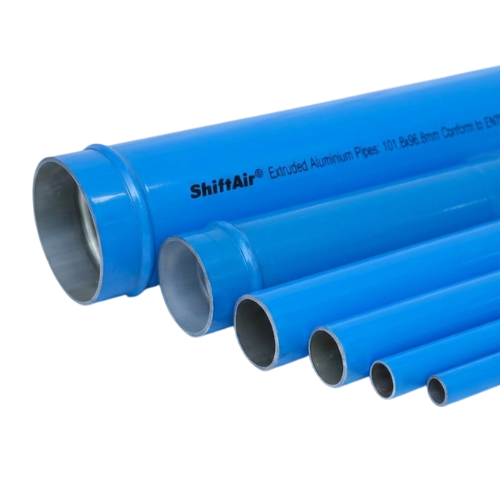
10 Compressed Air Piping Installation Mistakes That Cost Factories Thousands Every Year
A compressed air piping system may look simple on a drawing: a compressor, a main line, several branches and connections to production equipment. In practice, small installation decisions can have a major effect on pressure stability, energy consumption, air quality and long-term maintenance. Pipes that are too small, poorly routed or incorrectly supported may restrict airflow and increase pressure drop. Inadequate drainage can send moisture towards tools and machines. Weak connections may create recurring leaks, while a layout with no isolation strategy can force a factory to shut down an entire compressed air network for a minor repair. These problems are often discovered only after production begins. By that stage, correcting the system may require additional fittings, replacement piping, production downtime or an unnecessary increase in compressor pressure. The following ten compressed air piping installation mistakes should be addressed during the design and installation stages rather than after commissioning. Table of Contents Why proper compressed air piping installation matters Choosing the wrong pipe material Installing undersized compressed air pipes Using too many bends and restrictive fittings Designing an inefficient pipe layout Ignoring pressure-drop calculations Poor moisture drainage and pipe slope Using too few isolation valves Incorrect pipe supports and mounting Failing to plan for future expansion Skipping leak testing and commissioning checks Compressed air piping installation checklist How aluminium piping addresses common problems Frequently asked questions Why Proper Compressed Air Piping Installation Matters The compressor is only one part of an industrial compressed air system. Once the air leaves the compressor room, the piping network must deliver the required airflow and pressure to every production area. A factory may install a correctly sized compressor and still experience low pressure at machines if the distribution system is undersized, restricted or poorly arranged. Operators may respond by increasing the compressor discharge pressure. That may improve pressure at the final machine temporarily, but it can also increase electricity consumption, leakage and stress on system components. A properly planned compressed air distribution system should support five basic objectives: Deliver the required airflow to each point of use Maintain stable pressure during changing production demand Minimise pressure drop and leakage Control moisture and contamination Allow safe maintenance and future expansion Installation Should Be Based on Demand, Not Compressor Outlet Size The connection size on the compressor should not automatically determine the size of the entire distribution network. Pipe diameter should be selected according to airflow, operating pressure, total pipe length, acceptable pressure drop, network configuration and expected future demand. Mistake #1 Choosing the Wrong Pipe Material Selecting piping only according to its initial purchase price can lead to higher operating and maintenance costs over the system’s lifetime. Traditional threaded metal piping may be familiar to installers, but internal corrosion, scaling and rough surfaces can increase resistance to airflow. Threaded joints may also become recurring leak points, particularly in areas exposed to vibration or repeated production changes. Plastic materials that are not specifically approved for compressed air service can create serious safety risks. A material suitable for water is not automatically suitable for compressed gas. Compressed air stores energy, and an unsuitable pipe can fail differently from a water pipe. The selected material should be rated for the intended operating pressure and temperature and should be compatible with the compressor lubricant, environmental conditions and required air quality. Better approach: Compare materials based on pressure rating, corrosion resistance, internal surface condition, leak risk, installation method, safety, maintenance requirements and future modification costs—not only the initial price per metre. Mistake #2 Installing Undersized Compressed Air Pipes Undersized piping is one of the most common causes of excessive pressure drop. A smaller pipe forces compressed air to travel at a higher velocity. This increases friction and makes pressure losses worse, especially across long distances and during periods of peak demand. A system may appear to perform correctly when only a few machines are operating. The problem becomes visible when multiple production lines demand air at the same time. Common symptoms of undersized piping include: Low pressure at machines far from the compressor room Pressure fluctuations when high-demand equipment starts Slow pneumatic cylinder movement Reduced pneumatic tool performance Operators increasing regulator or compressor pressure Production interruptions during peak demand Pipe sizing should consider both the current airflow and reasonable future growth. Choosing a pipe that can only support today’s average demand may require an expensive replacement when new machines are added. Better approach: Size the main and branch lines using measured or calculated airflow, total equivalent length, working pressure and an acceptable pressure-drop target. Include expected expansion rather than designing only for current demand. Mistake #3 Using Too Many Bends and Restrictive Fittings Every bend, tee, reducer, valve and connection adds resistance to airflow. A long-radius bend generally creates less resistance than a sharp change in direction, while a poorly selected valve may create a significant restriction even when fully open. The actual resistance of a piping network therefore depends on more than its measured straight-line length. Designers use the concept of equivalent length to account for the pressure loss created by fittings and directional changes. An installation with frequent turns may behave like a much longer system than it appears on a floor plan. This is particularly important when pipes are routed around cable trays, structural columns, storage areas or existing equipment without an organised layout. Sudden reductions in diameter can also create bottlenecks. A properly sized main line provides limited benefit if airflow must pass through a restrictive connector, undersized valve or small flexible hose before reaching the machine. Better approach: Use direct, organised routes with gradual direction changes. Minimise unnecessary fittings and check the internal bore of valves, connectors, hoses and point-of-use components. Mistake #4 Designing an Inefficient Compressed Air Pipe Layout A single dead-end pipe may be suitable for a small installation with limited and predictable demand. In a larger factory, a ring-main or looped system often provides better pressure stability. In a ring layout, air can reach a demand point from more than one
Compressed Air Piping System Supplier: How to Choose the Right Partner for Industrial Projects
Compressed air is sometimes called the fourth service in modern manufacturing because it powers essential equipment in many industries, including automotive, pharmaceuticals, food processing, textiles, electronics, and CNC machining. However, the system’s efficiency relies not just on the compressor but also on the quality of the piping network that distributes air throughout the facility. Buying a good air compressor is important, but the piping system that carries the air throughout the facility is equally important. If the piping system is not properly designed or installed, it can cause air leaks, pressure drops, increased energy costs, and lower overall productivity. Choosing the right supplier is not only about buying pipes and fittings. It means picking a partner who can offer engineering know-how, help with installation, optimise airflow, and ensure the system runs reliably over time. To ensure a partner brings both products and expertise, plant managers must follow key evaluation steps: Review the supplier’s previous project case studies, ask for references from other industrial clients, and consider organising a site visit to observe installations in action. Ask for detailed proposals and compare how each supplier approaches design, materials, and after-sales service. These actions help ensure you select an established partner for reliable, durable performance. When evaluating suppliers, it’s important to be vigilant for any potential warning signs. Warning signs may include reluctance or inability to provide references, vague or generic project proposals, insufficient documentation of previous work, poor communication during the inquiry process, or inconsistent responses to technical questions. If a supplier does not offer site visits or avoids providing detailed system designs, these may also indicate a lack of experience or reliability. Identifying such issues early helps you avoid unreliable partners and make confident decisions. Why the Right Compressed Air Piping System Supplier Matters A compressed air system works as a complete network. Every pipe, fitting, valve, connector, and support structure affects how well the system performs. An experienced supplier ensures correct pipeline sizing, high-performance airflow design, lower pressure drop, reduced energy use, and future expansion options. Poorly designed systems may require compressors to operate at higher pressures to compensate for airflow losses. This can increase electricity costs and cause extra wear on equipment. Hidden Costs of Poor Compressed Air Pipeline Design Many factories still use old GI or MS piping systems because they cost less at first. However, these systems often lead to hidden costs later. Pressure Drop Pressure drop happens when compressed air loses pressure as it moves through the pipes. This can be caused by rough pipe surfaces, corrosion, too many bends, incorrect pipe sizes, or long distribution routes. Even slight pressure drops cause compressors to use more energy to maintain the required pressure. Air Leakage Leaks are a major cause of wasted energy in industrial compressed air systems. Leaks often occur at threaded joints, corroded sections, poor fittings, and old pipeline infrastructure. A professional compressed air pipe manufacturer focuses on leak prevention through improved connection technology and optimised system designs. Maintenance Expenses Traditional steel pipelines often require repeated repairs, rust removal, joint replacements, and, at times, production shutdowns. These maintenance tasks raise operating costs and lower plant productivity. What to Look for in an Industrial Air Compressor Piping Solutions Provider Not all suppliers have the same level of expertise. Before you choose a partner, keep these factors in mind. Engineering Capability A reliable supplier should offer airflow calculations, pipe sizing advice, pressure drop analysis, and support for network optimisation. Engineering support ensures the system works efficiently from the start. Installation Expertise Many projects fail when installation quality is ignored. Choose suppliers who offer site surveys, installation planning, professional commissioning, and system testing. Experienced suppliers can also schedule installations during planned shutdowns or off-peak hours to minimise plant downtime and prevent disruptions during ongoing production. Proper installation greatly improves extended reliability. Product Quality Industrial buyers should evaluate material quality (such as strength and durability), corrosion resistance (ability to resist rust and corrosion), pressure ratings (maximum pressure a pipe can safely withstand), and connection technology (how pipes and fittings are joined) to improve system performance and service life. Future Expansion Support Manufacturing plants often grow and expand over time. Systems should allow for: Additional machine connections New production lines Future capacity increases without major disruptions to current operations. Why Aluminium Compressed Air Piping Systems Are Replacing Traditional GI Pipes Industries across India are increasingly choosing aluminium compressed air piping systems because they offer numerous operational advantages. Corrosion-Free Performance Unlike GI pipes, aluminium does not rust internally. This helps keep airflow clean, improves air quality, and lowers the risk of contamination, which is especially important for pharmaceutical and food processing applications. Improved Airflow Efficiency Smooth internal pipe surfaces allow compressed air to flow through the system with less resistance. This reduces pressure drop, which means the compressor does not have to work as hard to deliver the required air pressure. This sustains uninterrupted airflow, improves efficiency, and lowers energy consumption. Faster Installation Modern modular aluminium systems can be installed much faster than traditional steel piping networks. This helps reduce project schedules, installation labour, and production downtime. Lower Lifetime Cost While aluminium systems may cost more initially, their lower maintenance requirements, energy savings, and reduced downtime often make them more advantageous in the long term. In many industrial applications, the investment in aluminium compressed air piping typically pays for itself within 18–36 months, thanks to lower energy costs and reduced maintenance. For example, a medium-sized facility switching from GI to aluminium piping can often recoup the added upfront cost in less than two years due to significant reductions in air leaks, pressure drop, and repair expenses. This quick payback makes aluminium pipes a practical and cost-effective choice for modern plants. Industries That Depend on Efficient Compressed Air Distribution Systems A well-designed compressed air distribution system is important for many industries. Automotive Manufacturing Compressed air powers robotic systems, paint booths, assembly tools, and material-handling equipment. Pharmaceutical Industry Reliable compressed air is required for packaging, production equipment, and clean manufacturing
Compressed Air Pipe Installation: Step-by-Step Guide for Factory Projects
Compressed Air Pipe Installation Guide for Factories | ShiftAir Home / Services / Compressed Air Pipe Installation Guide Factory Project Guide Compressed Air Pipe Installation: Step-by-Step Guide for Factory Projects A practical engineering guide covering site surveys, layout planning, pipe sizing, mounting, installation, testing, commissioning and handover for industrial facilities across Delhi NCR and India. Arrange an Engineer Site Visit Explore Piping Products Installation Scope Site survey and air-demand assessment Pipeline layout and pipe-size calculation Modular aluminium piping and fittings Mounting, installation and machine drops Leakage testing and commissioning Documentation and handover support Search intent Service-led commercial research Primary focus Safety, downtime and planning Target region Delhi NCR and pan-India Recommended action Engineer site visit On this page Project overview Why installation matters Installation process Site survey Layout and sizing Material selection Mounting plan Tools and safety Installation stages Testing and commissioning Handover Downtime planning Maintenance Service coverage FAQs Project Overview A Compressed Air Network Must Be Engineered as a Complete System A compressed air system is only as effective as the piping network that distributes air from the compressor room to production equipment. Even when a factory has a properly selected compressor, an undersized, leaking or poorly routed pipeline can cause pressure loss, unstable machine performance, higher compressor loading and unnecessary production interruptions. Professional compressed air pipe installation is therefore not limited to joining pipes and fittings. It is an engineering process that includes air-demand assessment, pipe sizing, routing, mounting, moisture management, isolation planning, testing and final commissioning. ShiftAir Transmission Pvt. Ltd. supports compressed air piping projects in Faridabad, Delhi NCR and industrial locations across India. Project support can include modular aluminium piping, layout planning, supply, installation, testing, commissioning and expansion planning. Quick Answer Eight Controlled Stages of Factory Air-Line Installation 1 Site Survey Inspect the compressor room, machine demand, structural supports, safety conditions and shutdown requirements. 2 Layout and Pipe Sizing Plan the main header, ring main or straight main, branches, drops, valves and future expansion points. 3 Material Selection Select compatible pipes, fittings, seals, valves and accessories with suitable ratings. 4 Mounting Plan Mark support points, clearances, valve access, drain locations and safe utility crossings. 5 Pipe Preparation and Installation Cut, deburr, clean and assemble the main header, branches and machine drops. 6 Point-of-Use Connections Install isolation, filtration, regulation and flexible connections at machine points. 7 Testing and Commissioning Check joints, supports, leakage, pressure performance and operation under representative load. 8 Handover and Maintenance Notes Provide as-built layouts, test records, valve identification and inspection guidance. System Performance Why Proper Compressed Air Piping Installation Matters Compressed air loses pressure as it moves through pipes, valves, bends, couplings and flexible connections. Friction, unnecessary changes in direction, restricted fittings and insufficient pipe diameter can increase this pressure loss. A useful engineering objective is to keep pressure drop in the fixed distribution network low while also accounting for losses through hoses, couplings, filters and fittings. Final limits must be confirmed through project-specific calculations. Operational Benefits Stable pressure at production machines More consistent pneumatic equipment performance Reduced leakage risk Lower unnecessary compressor loading Maintenance Benefits Easier isolation and maintenance Cleaner and more organised distribution Faster future expansion Better access to valves, filters and drain points Important Design Principle The final network must be designed for the factory’s actual and future air demand, not only for the compressor outlet size. Step 1 Conduct a Detailed Site Survey Every compressed air piping installation should begin with a physical site survey. The engineer should inspect the compressor room, air receiver, dryer, filtration system, production floor, machine locations, structural members, ceiling height and existing utility routes. The survey should record Compressor capacity and discharge pressure Existing and proposed machine demand Peak and average airflow requirements Distance to the farthest point of use Existing pipeline condition Dryer, filter and receiver arrangement Planned machinery or production expansion Available pipe-support locations Restricted or hazardous operating areas Maintenance and emergency access Permitted shutdown windows Possibility of phased installation For an existing plant, pressure readings should be taken near the compressor and at selected remote points while production equipment is operating. A significant difference may indicate leakage, undersized sections, restricted fittings or an inefficient layout. Information the plant should provide before the visit Factory layout or floor plan Machine list and machine locations Required pressure for each machine Air-consumption data Compressor and dryer specifications Current and proposed operating shifts Future expansion plan Production shutdown availability Step 2 Plan the Pipeline Layout and Pipe Size Once the air demand has been mapped, the engineer prepares the compressed air distribution layout. The design normally includes the compressor-room outlet, main header, ring main or straight distribution main, branch lines, vertical drops, isolation valves, drainage points, machine connections and future extension points. Ring main or straight-line layout? Where the plant layout permits, a closed-loop or ring-main network is often preferred. It can supply a point of use from more than one direction and can help improve pressure distribution across the production floor. A straight main may still be suitable for a smaller workshop, linear production layout or isolated production zone. The correct configuration depends on distance, demand diversity, pressure requirements and future expansion. Factors used for pipe sizing Design input Why it matters Required flow rate Determines the volume of air that the pipe must carry. Operating pressure Affects air density, equipment performance and allowable pressure loss. Total equivalent length Includes straight pipe plus the resistance created by fittings and valves. Peak simultaneous demand Ensures the network can support multiple machines operating together. Acceptable pressure drop Defines the performance target from the compressor room to remote points. Future capacity Prevents premature replacement when production expands. Pressure-Drop Calculation Pipe diameter should not be selected only by matching the compressor outlet. Long runs, peak demand, valves, bends and future additions must also be considered. Use the compressed air pressure-drop calculator during early project planning. Step 3 Select the Appropriate Pipe Material Material selection affects installation time, air quality, corrosion resistance, maintenance requirements and the ease of
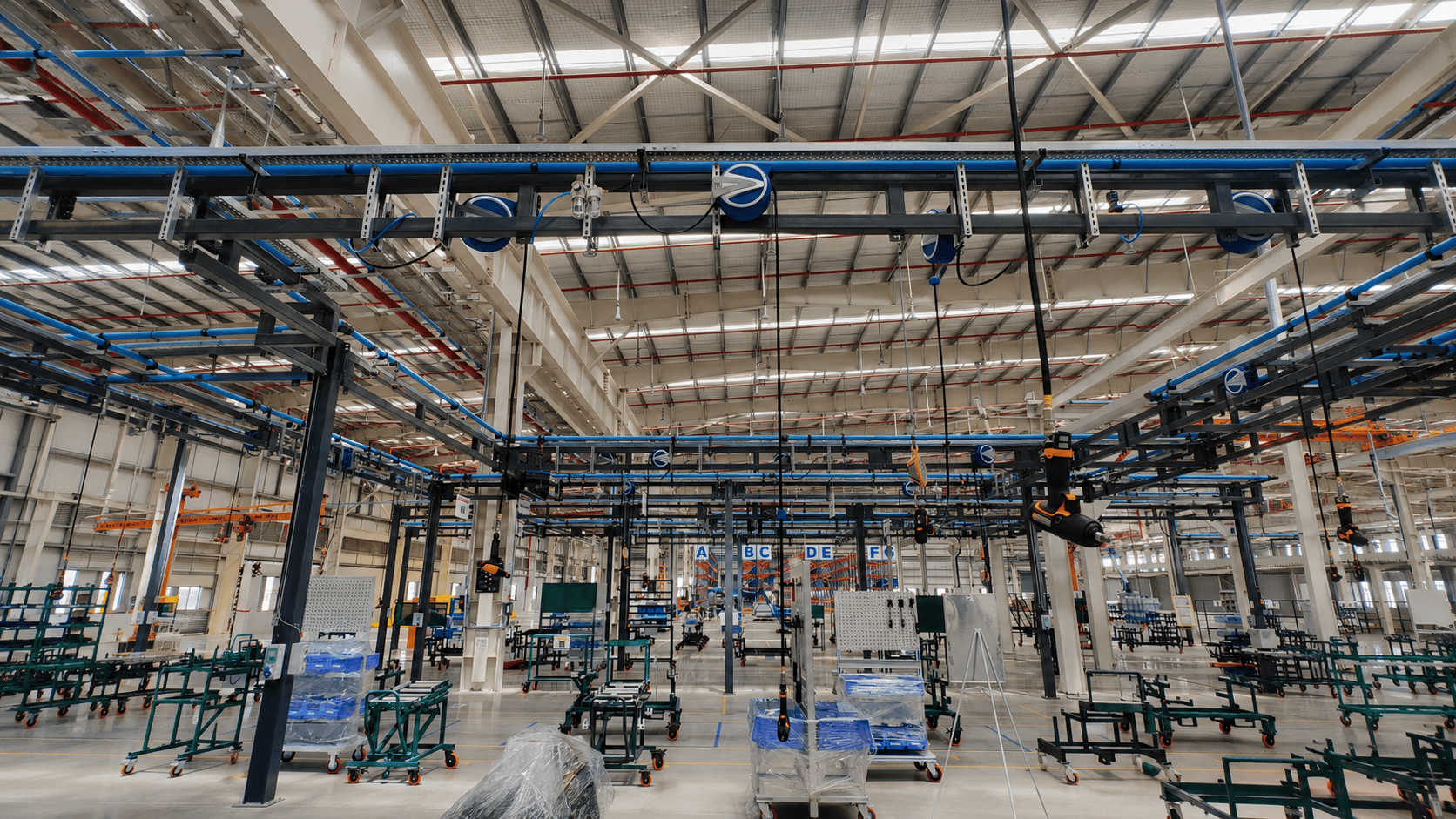
Compressed Air Piping System Manufacturers in India
Shiftair Transmission manufactures compressed air piping systems in India, providing modular aluminium piping, precision fittings, layout planning, installation support, and complete air distribution solutions for manufacturing plants. A compressed air piping system delivers compressed air from the compressor to machines, tools, production lines, and process areas within a factory. When the system is designed properly, it helps maintain stable air pressure, minimise leakage, improve air quality, and support better energy efficiency. In industries that rely on pneumatic tools, automation lines, CNC machines, packaging equipment, paint shops, assembly stations, and process systems, the piping network is as critical as the compressor itself. Even a high-performance compressor cannot function efficiently if the air distribution line has leaks, pressure drops, rust, contamination, undersized pipes, or poor layout planning. Shiftair Transmission helps Indian industries build cleaner, safer, and more reliable compressed air networks with modular aluminium piping systems. These systems are easier to install, expand, and maintain than many conventional GI, MS, or welded piping methods. Visit https://shiftairindia.com/ to request a solution for your industrial compressed air piping needs and explore our range of systems for industrial applications. What Is a Compressed Air Piping System? A compressed air piping system is an industrial air distribution network that transfers compressed air from the compressor room to end-use points in a plant. These points may include pneumatic tools, CNC machines, packaging lines, automation systems, paint shops, production equipment, and process machines. A good compressed air piping system should provide: Stable air pressure at machine points Low pressure drop across the network Minimal air leakage Clean air movement Corrosion-resistant performance Easy expansion for future production needs Safe and reliable industrial operation Improperly planned piping systems can lead to low air pressure, increased compressor load, frequent maintenance, air contamination, and higher energy costs. Why Choosing the Right Manufacturer Matters Selecting the right compressed air piping system manufacturer in India is an engineering decision that impacts productivity, energy consumption, maintenance, air quality, and long-term plant performance. A reliable manufacturer should understand: Compressor capacity Required working pressure Flow requirement Pipe sizing Pressure drop Plant layout Machine-side air demand Installation conditions Future expansion plans Maintenance access Shiftair Transmission focuses on real industrial needs and provides compressed air piping systems that help reduce leaks, improve airflow, and support long-term plant performance, not just basic material supply. Modular Compressed Air Piping System for Industrial Plants A modular compressed air piping system offers a modern alternative to traditional GI, MS, and welded pipelines. Conventional pipelines may appear durable, but over time they can develop internal rust, scaling, leaks, pressure losses, and maintenance issues. These problems may develop gradually, reducing air quality and increasing compressor workload over time. Shiftair Transmission’s modular aluminium compressed air piping system addresses these challenges. It is lightweight, corrosion-resistant, easy to install, and designed for clean air distribution throughout the plant. Its modular design allows easy modification, extension, or reconfiguration as production layouts change. This flexibility makes it suitable for new factories, plant expansions, compressor room upgrades, and replacement of old air lines. For industries looking for reliable compressed air distribution, cleaner airflow, reduced leakage risk, and improved system performance, Shiftair Transmission offers practical and long-term compressed air piping solutions. Why Choose Shiftair Transmission for Compressed Air Piping Systems in India? Shiftair Transmission delivers comprehensive compressed air piping solutions for industries seeking reliable air distribution, cleaner airflow, reduced leakage, and enhanced system performance. Industries choose Shiftair Transmission for the following advantages: Modular aluminium compressed air piping systems Leak-resistant fittings and modular connections Support for pipe sizing and layout planning Installation assistance for industrial projects Product support for new and existing plants Solutions for plant expansion and replacement projects Service support for Indian industrial requirements Piping systems designed for long-term reliability A compressed air network should never become the weak link in a production system. When the pipe material, layout, and fittings are selected correctly, the entire plant can operate with more stable pressure and better air availability. Problems with Traditional Compressed Air Piping Many factories continue to use conventional piping materials due to familiarity and availability. However, compressed air systems have different requirements than water or general utility piping. Old or poorly designed compressed air piping systems can cause the following issues: Internal rust and scaling Air contamination due to corrosion Pressure drop at distant machine points Leakage from threaded joints Difficulty in modifying or expanding the line Longer installation time Frequent maintenance and shutdowns Higher compressor workload due to air loss Poor appearance in modern industrial setups When piping systems cause pressure loss, factories often increase compressor pressure to compensate. While this may seem effective in the short term, it raises energy consumption and operating costs. Properly designed piping delivers air efficiently without overloading the compressor. Aluminium Compressed Air Piping System Aluminium is widely used in modern compressed air piping systems because it offers a strong balance of durability, cleanliness, corrosion resistance, and ease of installation. Unlike iron or steel pipes, aluminium does not create internal rust that can travel through the air line and affect tools, filters, valves, and machines. Shiftair Transmission aluminium piping systems are designed for industrial compressed air distribution applications where performance, clean airflow, and long-term reliability matter. Key benefits of aluminium compressed air piping include: Lightweight handling during installation Corrosion-resistant performance Cleaner compressed air movement Reduced internal friction Better appearance for modern plants Simple installation and alignment Easy expansion and modification Long service life under recommended operating conditions For industries requiring clean, efficient, and adaptable compressed air distribution, aluminium piping offers a practical long-term solution. Leak-Resistant Fittings and Modular Connections A compressed air piping system is only as reliable as its joints. Even minor leaks waste energy every day. While some plants accept air leakage as a normal issue, it directly impacts compressor efficiency and operating costs. Shiftair Transmission modular fittings ensure safe and reliable connections for compressed air distribution. The system minimises the need for welding, threading, and complex fabrication, enabling faster and cleaner installation while reducing downtime in industrial environments. Modular fittings
Best Compressed Air Pipe Installation Services Provider in Faridabad & Delhi NCR
Engineering & Contractor Guide Industrial air compressors run CNC machine centers, laser cutters, pneumatic actuators, and robotic assembly cells. However, even an efficient rotary screw compressor cannot deliver stable airflow through an undersized, corroded, or leaking line. ShiftAir Transmission Pvt. Ltd. is a dedicated industrial compressed air piping contractor based in Faridabad, providing turnkey design, supply, and installation across Delhi NCR and India. We specialize in modular aluminium compressed air ring main installation, compressor room header retrofitting, and pipeline modernizations that stabilize operating pressure, stop air leaks, and lower electrical expenses. Why Factory Compressed Air Piping Design Controls Operating Costs Compressed air is often called the “fourth utility,” routinely accounting for 20% to 35% of a factory’s total electricity costs. Plant managers frequently invest in variable-frequency drive (VFD) compressors, refrigerated air dryers, and coalescing filtration, but leave the distribution network unaddressed. Running an inefficient pipe system forces compressors to work harder than necessary, leading to severe line friction and insufficient air pressure at CNC machines during peak shifts. Inadequate piping engineering creates several common operational bottlenecks: Excessive Line Pressure Drop (> 0.5 bar / 7 PSI): Forcing operators to raise compressor discharge setpoints simply to deliver baseline operating pressure to distant machine drops. Micro Air Leak Losses: Threaded joints, deteriorating seals, and corroded fittings routinely waste 15% to 30% of total generated capacity before air ever reaches production tools. Internal Pipeline Rust & Scaling: Ambient moisture reacts with conventional Galvanized Iron (GI) and carbon steel lines, shedding abrasive rust particles that clog valves, cylinders, and solenoid packs. Condensate Carryover: Level, unsloped lines lacking proper moisture-trap drop legs allow liquid condensate to contaminate spray booths, laser optics, and packaging machinery. Excessive Compressor Unloading Cycles: Narrow distribution pipes create dynamic backpressure, causing compressors to cycle rapidly between load and unload states, which accelerates motor wear. Financial Return on Investment (ROI) for Plant Engineers: Every 1 bar (14.5 PSI) of excess discharge pressure required to overcome line resistance increases compressor motor power consumption by 7% to 10%. If your facility incurs ₹20,00,000 annually in compressor electricity costs, an engineered modular aluminium network that stops 20% joint leakage and reduces line pressure drop by 0.8 bar can generate up to ₹4,50,000 in yearly energy savings. With a typical installation investment, complete capital payback is achieved within 18 to 24 months. Quick Engineering Reference: CFM vs. Pipe Diameter vs. Distance To prevent line choking, linear air velocity should not exceed 6 to 8 m/s in main distribution headers and 15 m/s in point-of-use drops. Below is a sizing guide for a typical 7 bar(g) (100 PSI) industrial distribution network: Compressor Flow (CFM) Equivalent kW / HP Main Header Run < 50 Meters Main Header Run 50–150 Meters Main Header Run > 150 Meters 50 – 100 CFM 11 kW – 18.5 kW (15–25 HP) 25 mm (1″) Aluminium 32 mm (1-1/4″) Aluminium 40 mm (1-1/2″) Aluminium 100 – 200 CFM 22 kW – 37 kW (30–50 HP) 40 mm (1-1/2″) Aluminium 50 mm (2″) Aluminium 63 mm (2-1/2″) Aluminium 200 – 400 CFM 45 kW – 75 kW (60–100 HP) 50 mm (2″) Aluminium 63 mm (2-1/2″) Aluminium 80 mm (3″) Aluminium 400 – 800 CFM 90 kW – 160 kW (125–215 HP) 63 mm (2-1/2″) Aluminium 80 mm (3″) Aluminium 100 mm (4″) Aluminium 800+ CFM 200 kW+ (270 HP+) 80 mm (3″) Aluminium 100 mm (4″) Aluminium 158 mm (6″) Aluminium Comparison of Industrial Piping Materials Selecting the right piping material is essential for pressure stability, safety, and ISO 8573 air purity compliance: Material Inner Roughness (k) Corrosion Risk Pressure Drop Stability Safety & Suitability Modular Aluminium $k approx 0.0015text{ mm}$ (Ultra-smooth) Zero (100% rustproof) Consistent over 20+ years Recommended modern industry standard; clean, fast assembly Galvanized Iron (GI) $k approx 0.15text{ mm}$ (Rough wall) High (internal oxidation & scale) Increases by 30%–50% over time Traditional material; heavy, prone to joint leaks and clogging Mild Steel (MS) $k approx 0.12text{ mm}$ (Moderate drag) Severe (corrodes quickly) Rapid drop due to rust buildup Requires welding/hot work; produces heavy debris in tools PVC / CPVC Plastic $k approx 0.005text{ mm}$ (Smooth) Zero (non-metallic) Maintains pressure Hazardous: Oil and heat cause brittleness, risking explosive shattering; banned by OSHA Field Case Study: Automotive Component Manufacturer (IMT Manesar) The Challenge: A Tier-1 automotive machining facility operating four 45 kW rotary screw compressors experienced severe pressure drops. Pressure fluctuated between 7.2 bar in the compressor room down to 4.8 bar at CNC tooling spindles during peak shifts, causing tool chatter and quality rejections across their 12-year-old threaded GI line. The Solution: ShiftAir engineered and installed a 63mm modular aluminium closed-loop ring main (320 meters total run) with 28 top-take-off drop saddles (25mm) and sectional isolation ball valves. Mechanical installation was completed during production hours, with cut-overs performed across two 4-hour scheduled shift intervals. The Outcome: Terminal pressure stabilized at 6.6 bar across all CNC workstations with minimal line drop (≤ 0.15 bar). Compressor room discharge pressure was lowered from 8.0 bar to 7.0 bar. The plant shut down one 45 kW compressor completely, keeping it on standby and saving ₹5,40,000 annually in electricity costs. Turnkey Compressed Air Piping Methodology ShiftAir manages every stage of execution, from initial leak audits to line commissioning: 1Pneumatic Flow Audit Surveying peak and coincident CFM demand, operating pressures, duty cycles, and compressor room discharge sizing. 2Isometric Route Planning Designing closed-loop ring mains, zonal sub-headers, isolation valves, and vertical machine drops using CAD. 3Calibrated Bore Sizing Applying hydrodynamic calculations to keep distribution velocity within efficient limits (≤ 6–8 m/s). 4Mechanical Installation Mounting lines using anti-vibration brackets, structural clamps, and rigid roof-truss hangars. 5Condensate Drop Configuration Installing top-take-off drop brackets to prevent line moisture from draining into machine spindles. 6Hydrostatic & Leak Testing 1.5x working pressure holding tests, ultrasonic leak audits, and final commissioning handover. Industrial Contractors in Faridabad, Delhi NCR, and Nationwide From our engineering center in Faridabad, ShiftAir serves major manufacturing corridors across North India, handling new industrial plants, facility expansions, and full
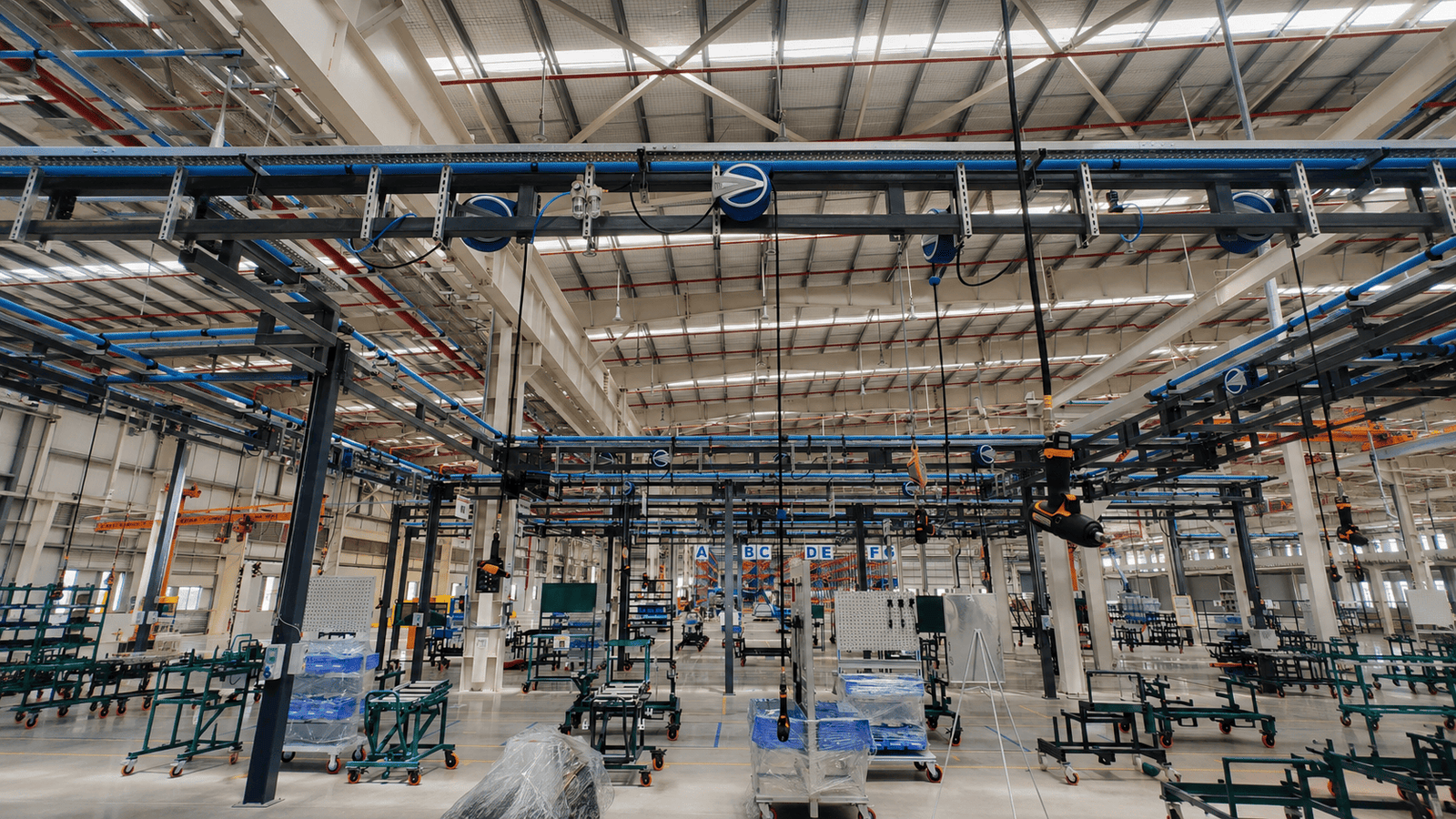
Why Industries Are Switching to Modular Aluminium Piping Systems
Why Industries Are Switching to Modular Aluminium Piping Systems | ShiftAir Home / Blog / Modular Aluminium Piping Systems Industrial Utility Planning Why Industries Are Switching to Modular Aluminium Piping Systems Manufacturing plants are moving away from difficult-to-modify conventional pipelines and evaluating modular aluminium compressed air piping for faster assembly, cleaner layouts, easier expansion and more structured long-term utility planning. Discuss Replacement of Old Piping Explore Aluminium Piping Products Quick Assembly Easy Expansion Clean Utility Layout Primary keywordModular aluminium piping system Search intentCommercial research Best suited forReplacement and expansion Project actionAssess the existing network On this page Why the shift is happening What modular means Business reasons to switch Installation speed Expansion flexibility Leakage and clean layout Industry applications When replacement makes sense Replacement planning What to evaluate FAQs The Change in Factory Utilities Compressed Air Networks Must Keep Up With Changing Production Modern factories rarely remain static. Machines are added, production cells move, capacity increases and air-demand patterns change. A compressed air distribution network installed for the original plant layout may become difficult to manage after years of modifications. New branches are added, temporary hoses become permanent, pressure becomes inconsistent and maintenance teams spend more time working around an ageing utility system. This is one reason manufacturing units are considering a modular aluminium piping system when building a new compressed air network or replacing conventional piping. The interest is not based on appearance alone. It is driven by the need for faster project execution, easier modifications, organised distribution and a network that can support future production changes. A modular system is not automatically the correct answer for every plant. Pipe size, pressure, airflow, temperature, environment, air-quality requirements and installation quality still determine performance. However, when the system is properly engineered, modular aluminium piping can offer practical advantages for factories that expect their utility network to evolve. What Modular Means A Coordinated System of Tubes, Connectors, Brackets and Valves “Modular” means the compressed air distribution network is built from compatible system components rather than treated as a collection of unrelated pipes and fittings. 01 Aluminium Tubes Lightweight pipe sections form the main headers, ring mains, branches and machine drops. 02 Connectors and Fittings Compatible elbows, tees, reducers, adaptors and flange connections create the required network geometry. 03 Valves and Supports Isolation valves, brackets and clamps organise the system into accessible and maintainable zones. The value of modularity becomes visible when the factory layout changes. A planned connection point can be extended, a drop can be relocated and a production zone can be isolated without rebuilding the entire distribution system. Any modification must still be checked for available flow capacity and pressure drop. Modular Does Not Mean “Install Without Engineering” The components may be easier to assemble, but the network still requires a site survey, pipe-size calculation, routing plan, support plan, safety controls, testing and commissioning. Business Reasons to Switch Factories Are Looking Beyond the Initial Pipe Cost The real comparison between conventional and modular piping is not limited to the price per metre. Plant teams should also evaluate installation labour, shutdown requirements, corrosion exposure, leakage points, maintenance access, modification time and the cost of future production changes. Decision area Challenge in an ageing or frequently modified network How a modular approach may help Plant modification Extensions may require cutting, threading, welding or extensive rework. Compatible fittings can make approved branches and drops easier to add or relocate. Project execution Hot work, surface preparation and complex joining can extend installation time. Mechanical assembly can reduce the number of fabrication activities at the installation area. Internal condition Corrosion and scale can create long-term maintenance and airflow concerns in some conventional systems. Aluminium provides resistance to internal rusting under normal intended compressed-air service. Utility planning Unplanned additions can create confusing routes and inaccessible valves. A component-based system supports cleaner zoning, identification and future connection planning. Shutdown management Replacement can disrupt production if the complete network must be changed at once. New headers and supports may be installed in phases before controlled final tie-ins. 1. Reduced exposure to internal rusting Conventional ferrous pipelines can deteriorate internally when moisture management is poor or the network remains in service for long periods. Rust and debris can contribute to maintenance problems and contaminate downstream components. Aluminium does not internally rust in the same way under normal intended service, although air treatment, filtration and drainage are still necessary. 2. A cleaner, more visible utility layout Plant teams need to identify mains, branches, valves and machine drops quickly. Consistent pipes, fittings and supports can make the network easier to trace, label and inspect. A clean layout also helps future contractors and maintenance teams understand how the system is organised. 3. Easier long-term planning A factory may know that another production line will be added in twelve months even if the exact machine positions are not final. A modular network can be planned with suitable header capacity, isolation zones and future connection points so expansion does not begin with a complete redesign. Installation Speed Mechanical Assembly Can Simplify Project Execution Modular aluminium systems generally use cut, prepared and mechanically assembled pipe sections. The installation team measures the route, cuts the tube, deburrs and prepares the ends, installs the approved connector and secures the network on planned supports. This process can reduce dependence on welding and threading activities for the compressed air distribution network. It may also reduce associated tasks such as extensive surface finishing or repainting of the pipe after installation. Potential Project Advantages Lower pipe weight during handling Faster section preparation Cleaner work around production areas Fewer hot-work activities for the pipe network Quicker relocation of approved drops What Still Requires Planning Working-at-height controls Isolation and depressurisation Support spacing and structural checks Correct insertion and tightening procedures Leakage and pressure testing Installation Time Depends on the Site No standard system can guarantee a fixed installation time. Plant height, route complexity, machine access, shutdown windows, pipe sizes and the condition of the existing network all affect the schedule. Expansion