
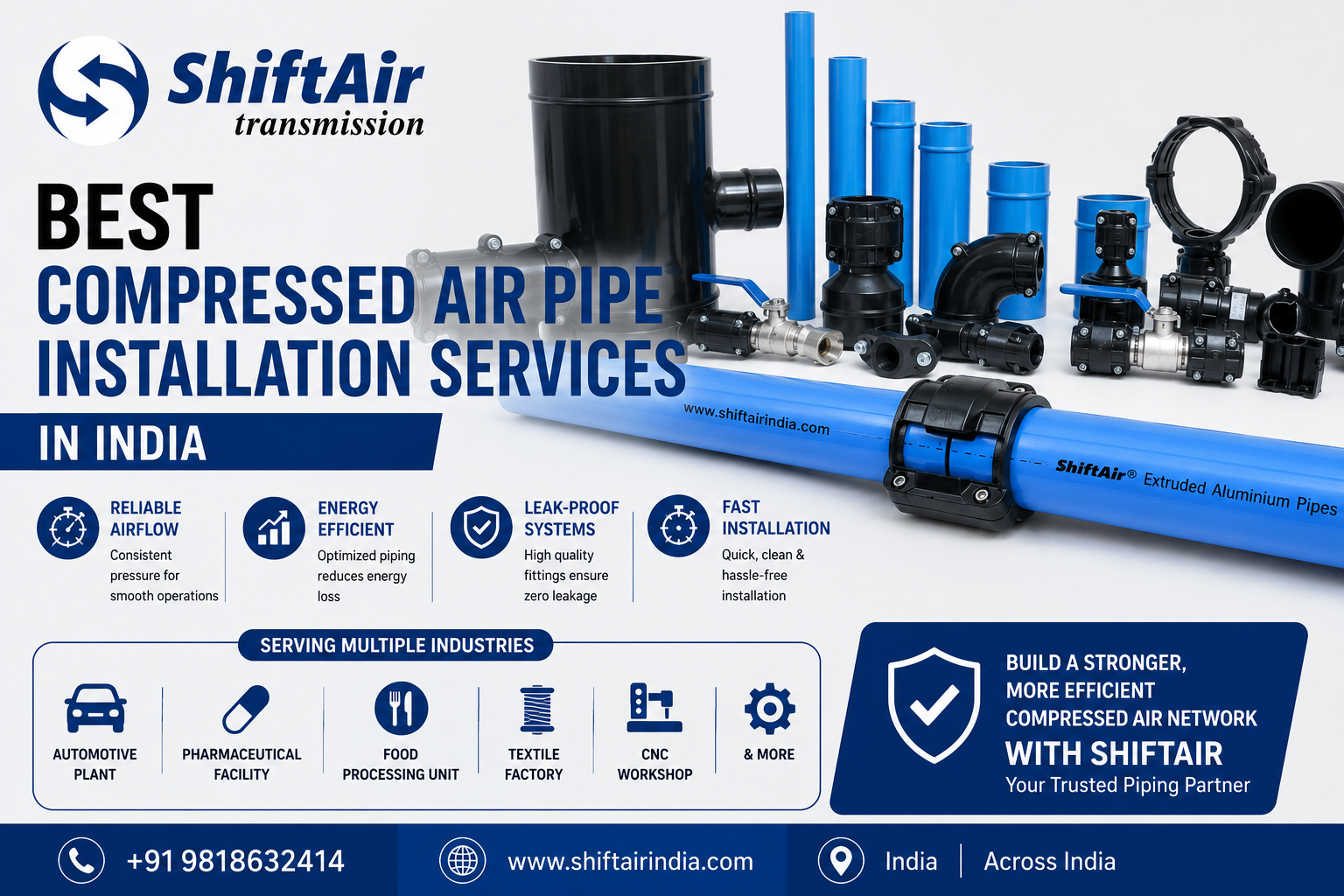
Compressed air is sometimes called the fourth service in modern manufacturing because it powers essential equipment in many industries, including automotive, pharmaceuticals, food processing, textiles, electronics, and CNC machining. However, the system’s efficiency relies not just on the compressor but also on the quality of the piping network that distributes air throughout the facility.
Buying a good air compressor is important, but the piping system that carries the air throughout the facility is equally important. If the piping system is not properly designed or installed, it can cause air leaks, pressure drops, increased energy costs, and lower overall productivity.
Choosing the right supplier is not only about buying pipes and fittings. It means picking a partner who can offer engineering know-how, help with installation, optimise airflow, and ensure the system runs reliably over time.
To ensure a partner brings both products and expertise, plant managers must follow key evaluation steps: Review the supplier’s previous project case studies, ask for references from other industrial clients, and consider organising a site visit to observe installations in action. Ask for detailed proposals and compare how each supplier approaches design, materials, and after-sales service. These actions help ensure you select an established partner for reliable, durable performance.
When evaluating suppliers, it’s important to be vigilant for any potential warning signs. Warning signs may include reluctance or inability to provide references, vague or generic project proposals, insufficient documentation of previous work, poor communication during the inquiry process, or inconsistent responses to technical questions. If a supplier does not offer site visits or avoids providing detailed system designs, these may also indicate a lack of experience or reliability. Identifying such issues early helps you avoid unreliable partners and make confident decisions.
Why the Right Compressed Air Piping System Supplier Matters
A compressed air system works as a complete network. Every pipe, fitting, valve, connector, and support structure affects how well the system performs.
An experienced supplier ensures correct pipeline sizing, high-performance airflow design, lower pressure drop, reduced energy use, and future expansion options.
Poorly designed systems may require compressors to operate at higher pressures to compensate for airflow losses. This can increase electricity costs and cause extra wear on equipment.
Hidden Costs of Poor Compressed Air Pipeline Design
Many factories still use old GI or MS piping systems because they cost less at first. However, these systems often lead to hidden costs later.
Pressure Drop
Pressure drop happens when compressed air loses pressure as it moves through the pipes. This can be caused by rough pipe surfaces, corrosion, too many bends, incorrect pipe sizes, or long distribution routes.
Even slight pressure drops cause compressors to use more energy to maintain the required pressure.
Air Leakage
Leaks are a major cause of wasted energy in industrial compressed air systems.
Leaks often occur at threaded joints, corroded sections, poor fittings, and old pipeline infrastructure.
A professional compressed air pipe manufacturer focuses on leak prevention through improved connection technology and optimised system designs.
Maintenance Expenses
Traditional steel pipelines often require repeated repairs, rust removal, joint replacements, and, at times, production shutdowns. These maintenance tasks raise operating costs and lower plant productivity.
What to Look for in an Industrial Air Compressor Piping Solutions Provider
Not all suppliers have the same level of expertise. Before you choose a partner, keep these factors in mind.
Engineering Capability
A reliable supplier should offer airflow calculations, pipe sizing advice, pressure drop analysis, and support for network optimisation.
Engineering support ensures the system works efficiently from the start.
Installation Expertise
Many projects fail when installation quality is ignored.
Choose suppliers who offer site surveys, installation planning, professional commissioning, and system testing. Experienced suppliers can also schedule installations during planned shutdowns or off-peak hours to minimise plant downtime and prevent disruptions during ongoing production.
Proper installation greatly improves extended reliability.
Product Quality
Industrial buyers should evaluate material quality (such as strength and durability), corrosion resistance (ability to resist rust and corrosion), pressure ratings (maximum pressure a pipe can safely withstand), and connection technology (how pipes and fittings are joined) to improve system performance and service life.
Future Expansion Support
Manufacturing plants often grow and expand over time. Systems should allow for:
- Additional machine connections
- New production lines
- Future capacity increases
without major disruptions to current operations.
Why Aluminium Compressed Air Piping Systems Are Replacing Traditional GI Pipes
Industries across India are increasingly choosing aluminium compressed air piping systems because they offer numerous operational advantages.
Corrosion-Free Performance
Unlike GI pipes, aluminium does not rust internally. This helps keep airflow clean, improves air quality, and lowers the risk of contamination, which is especially important for pharmaceutical and food processing applications.
Improved Airflow Efficiency
Smooth internal pipe surfaces allow compressed air to flow through the system with less resistance. This reduces pressure drop, which means the compressor does not have to work as hard to deliver the required air pressure.
This sustains uninterrupted airflow, improves efficiency, and lowers energy consumption.
Faster Installation
Modern modular aluminium systems can be installed much faster than traditional steel piping networks.
This helps reduce project schedules, installation labour, and production downtime.
Lower Lifetime Cost
While aluminium systems may cost more initially, their lower maintenance requirements, energy savings, and reduced downtime often make them more advantageous in the long term. In many industrial applications, the investment in aluminium compressed air piping typically pays for itself within 18–36 months, thanks to lower energy costs and reduced maintenance. For example, a medium-sized facility switching from GI to aluminium piping can often recoup the added upfront cost in less than two years due to significant reductions in air leaks, pressure drop, and repair expenses. This quick payback makes aluminium pipes a practical and cost-effective choice for modern plants.
Industries That Depend on Efficient Compressed Air Distribution Systems
A well-designed compressed air distribution system is important for many industries.
Automotive Manufacturing
Compressed air powers robotic systems, paint booths, assembly tools, and material-handling equipment.
Pharmaceutical Industry
Reliable compressed air is required for packaging, production equipment, and clean manufacturing environments.
Food Processing
Air quality and contamination control are important. Aluminium piping helps deliver better air. Food and pharmaceutical plants must meet strict hygiene standards, and they often require piping systems that minimise the risk of contamination, resist corrosion, and are easy to clean. Using modern aluminium systems helps the industry comply with regulatory requirements and maintain high product quality.
Engineering Industries
Machine performance relies on stable air pressure, constant airflow, and minimal pressure fluctuations.
Why ShiftAir Is a Trusted Compressed Air Piping System Supplier in India
ShiftAir Transmission Pvt. Ltd. specialises in industrial compressed air systems that improve efficiency, reduce energy losses, and make maintenance easier.
The company provides:
- Aluminium compressed air piping systems
- Compressed air distribution networks
- Pneumatic piping solutions
- Engineering design support
- Installation and commissioning services
- Comprehensive after-sales support, including routine maintenance, troubleshooting assistance, prompt spare parts supply, and technical guidance for system upgrades and modifications. Ongoing service agreements are available to ensure continued system reliability and long-term performance.
By focusing on better airflow, pressure control, and modular system design, ShiftAir helps industries boost productivity and lower operating expenses.
Choosing the right compressed air piping system supplier is an important choice that directly affects plant efficiency, energy use, maintenance expenses, and sustained reliability. Selecting an experienced supplier ensures your compressed air system performs at its best, helping your facility achieve consistent production and lowered operating expenses.
A well-designed compressed air network lowers pressure drops, reduces leaks, enables future expansion, and reduces energy use. As manufacturing sectors modernise, aluminium pipe systems and engineered airflow solutions become increasingly popular choices for manufacturers seeking reliability and greater savings.
By partnering with an experienced compressed air piping system supplier, you can achieve higher efficiency, improved reliability, and greater returns on your investment. Take action now: Review potential suppliers that provide high-quality products, expert engineering support, and proven industry expertise, and get in touch with them now to begin optimising your operations.
FAQs
What does a compressed air piping system supplier do?
A compressed air piping system supplier provides piping products (tubes, fittings, and connectors), engineering support (design and technical advice), installation services (assembling the system at the facility), and system optimisation solutions (methods to improve effectiveness and consistency) for industrial compressed air networks.
Why is aluminium piping better than GI piping?
Aluminium piping offers corrosion resistance, lower pressure drop, cleaner airflow, and faster installation than traditional GI piping.
How does pressure drop affect compressor performance?
Higher pressure drops force compressors to work harder, increasing electricity consumption and reducing system efficiency.
Which industry benefits from aluminium piping systems for compressed air?
The automotive, pharmaceutical, food processing, textile, electronic, packaging, and CNC manufacturing industries commonly use aluminium compressed air piping systems.
How can industries reduce compressed air energy costs?
By improving pipeline design, reducing leakage, minimising pressure drop, and using energy-efficient compressed air distribution systems.