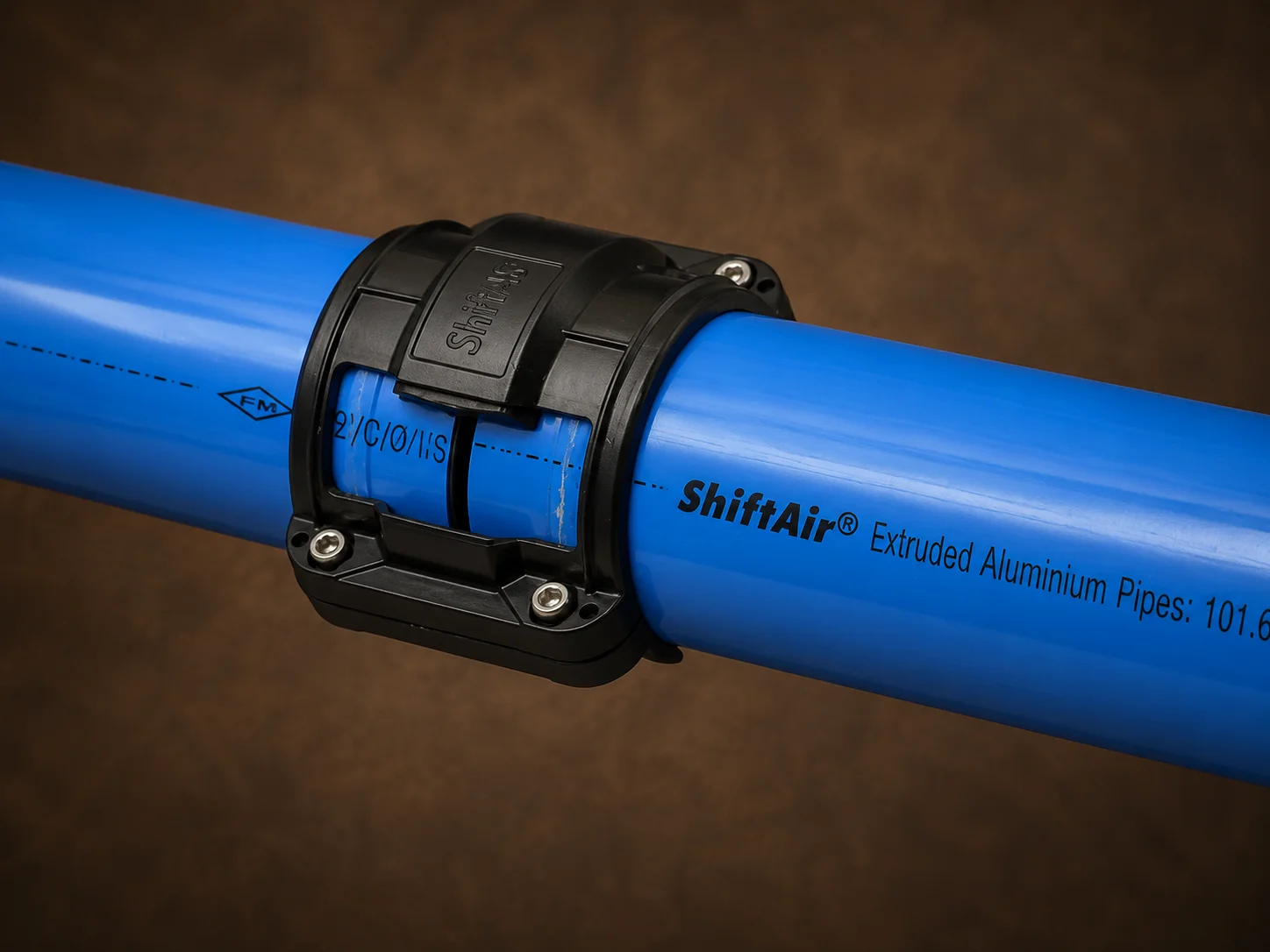
Compressed Air Piping Installation Cost in India: Complete 2026 Guide
August 22, 2026
- No Comments
The cost of installing a compressed air piping system in India cannot be calculated accurately from pipeline length alone. Pipe diameter, airflow, operating pressure, fittings, valves, machine drops, installation height and factory conditions all influence the final price.
A 200-metre straight pipeline with limited branches may cost less to install than a 120-metre network containing several bends, elevated sections and multiple machine connections. There is therefore no universal compressed air piping installation rate in India. The final price should be calculated from an approved design and bill of quantities.
Pricing disclaimer: This guide explains the cost-estimation process for industrial projects. It does not provide a fixed price per metre. Material rates and installation costs vary according to specifications, location and site conditions.
What Determines Compressed Air Piping Installation Cost?
Cost factor
Why it affects the price
Pipe diameter
Larger pipes and fittings require more material.
Pipeline length
Determines the quantity of pipe and supports.
Airflow requirement
Influences the required pipe diameter.
Working pressure
Affects system and component selection.
Machine drops
Each drop requires pipe, fittings, valves and labour.
Bends and branches
Increase fitting quantities and installation time.
May require additional capacity and connection points.
Before finalising a diameter, use ShiftAir’s compressed air pressure-drop calculator for a preliminary assessment. Final sizing should still be reviewed against actual plant conditions.
Why Cost per Metre Can Be Misleading
A per-metre rate can offer a basic reference for straight pipe, but it does not represent the complete installed network. Compare two hypothetical projects:
Project A
Project B
200 metres, accessible route, eight drops, limited fittings and installation in a new factory.
200 metres, thirty drops, multiple branches, elevated routing and work during planned shutdowns.
Project B requires more fittings, valves, supports, manpower, access equipment and installation time. Quotations should therefore be based on an approved bill of quantities rather than only a running-metre rate.
Components That Build the Final Project Cost
1. Aluminium pipes
Pipe cost depends on diameter, wall thickness, aluminium specification, pressure rating, surface treatment and quantity. A network may use larger pipes for the main header, intermediate sizes for departmental branches and smaller pipes for machine drops. Explore ShiftAir’s aluminium pipes, fittings, valves and installation accessories.
2. Fittings and connectors
Straight connectors, elbows, tees, reducers, end caps, threaded adaptors, flanges and outlet blocks can represent a meaningful part of the budget. A congested route normally requires more directional changes. Efficient planning helps control material cost and pressure loss.
3. Isolation valves
Valves allow individual production areas or machine groups to be isolated without depressurising the complete network. They may be required at compressor outlets, headers, ring-main sections, branches and future expansion points. Quantity should be based on operational and maintenance needs, not price alone.
4. Machine drops
A machine drop may include a branch connection, vertical pipe, isolation valve, outlet fitting, flexible connection, regulator, drain arrangement and supports. The number and design of drops can materially change the final quotation.
5. Clamps, brackets and supports
Support requirements depend on diameter, routing, recommended spacing, building structure, vibration and height. Confirm whether clamps, brackets, threaded rods, channels and fasteners are included. Heavy structural fabrication or civil work may be separate.
6. Installation labour and access
Labour cost changes with accessibility, height, fitting count, safety procedures, working hours and shutdown restrictions. Elevated routes may need scaffolding, scissor lifts or boom lifts. Read the common compressed air piping installation mistakes before approving execution.
7. Testing, commissioning and logistics
The scope may include visual joint inspection, pressure testing, leak inspection, valve checks, alignment review, handover, transportation, unloading, travel and accommodation. Each item should be clearly included or excluded in the commercial offer.
Aluminium vs GI: Cost Considerations
Cost consideration
Modular aluminium
Traditional GI
Initial material price
Generally higher
Generally lower
Pipe weight
Lightweight
Heavy
Cutting and threading
Usually minimised
Commonly required
Hot work
Generally avoided
May be required depending on method
Installation speed
Generally faster
Generally slower
Internal corrosion
Corrosion-resistant
Can occur over time
Future changes
Comparatively easier
More labour-intensive
Maintenance
Potentially lower when correctly installed and operated
Material: pipes by diameter, connectors, elbows, tees, reducers, valves, flanges and drop components.
Mounting: clamps, brackets, rods, channels, fasteners and structural supports.
Installation: labour, supervision, tools, assembly, route marking and coordination.
Site requirements: scaffolding, lifting equipment, safety, transport, unloading and storage.
Completion: pressure testing, leakage inspection, commissioning, documentation and taxes.
A reasonable contingency may be considered for unidentified site conditions or formally approved changes in scope.
Example Bill of Quantities
Item
Specification
Quantity
Unit
Unit rate
Amount
Aluminium pipe
Diameter and pressure rating
—
Metre
—
—
Connectors and elbows
According to pipe size
—
Number
—
—
Equal/reducing tees
According to design
—
Number
—
—
Isolation valves
According to pipe size
—
Number
—
—
Machine drops
According to outlet design
—
Number
—
—
Clamps and supports
According to support plan
—
Number
—
—
Installation
Approved system
—
Job
—
—
Testing
Installed network
—
Job
—
—
Transportation
Project location
—
Job
—
—
Information Required for an Accurate Quotation
Plant location and factory layout
Compressor capacity and operating pressure
Required pressure at points of use
Required airflow in CFM or another specified unit
Approximate pipeline length
Number and location of machines and drops
Approximate installation height
Existing network details, where applicable
Future production expansion
Completion date, permitted hours and shutdown availability
Testing and documentation requirements
For complex networks, replacements or operating factories, a site assessment is recommended. ShiftAir’s compressed air piping services cover network planning and installation support.
How to Compare Compressed Air Piping Quotations
Confirm that every bidder has quoted the same technical and commercial scope. Compare pipe length by diameter, pressure rating, fittings, valves, drops, supports, labour, access equipment, transportation, testing, warranty, schedule, taxes and exclusions.
A lower quotation may simply exclude important components. Request technical and commercial clarification before making a final comparison.
How to Control Installation Cost
Provide an accurate factory layout.
Confirm machine locations before installation.
Avoid unnecessary bends and route changes.
Plan headers, branches and future connections correctly.
Coordinate work with maintenance shutdowns.
Finalise supports before material dispatch.
Separate essential work from optional scope.
Check every commercial exclusion.
Choosing an undersized pipe to reduce the initial price is not recommended. It can result in pressure drop, unstable machine performance and higher compressor energy consumption.
Is Modular Aluminium Piping Worth the Investment?
Modular aluminium piping can offer long-term value where a facility requires corrosion-resistant distribution, clean internal surfaces, faster assembly, easier expansion, organised routing and reduced maintenance. Material selection alone cannot guarantee an efficient system: the network must also be correctly sized, routed, supported, installed and tested.
Frequently Asked Questions
What is the compressed air piping installation cost in India?
It depends on diameter, length, fittings, valves, drops, installation height and site conditions. An approved bill of quantities is required to calculate the complete installed price.
Can compressed air piping be priced per metre?
A per-metre rate can provide a straight-pipe reference, but it does not represent a complete project. Fittings, valves, drops, supports, labour, testing and access equipment must also be included.
Is aluminium compressed air piping more expensive than GI?
Its initial material price may be higher. Installation time, corrosion, maintenance, future modifications and lifecycle performance should also be considered.
Does a quotation include installation?
That depends on the supplier’s scope. Confirm whether labour, supports, transportation, access equipment, testing, commissioning and taxes are included.
Why is pipe sizing important?
Incorrect sizing can cause excessive pressure drop, unstable machine performance and increased compressor energy consumption. Diameter should be selected according to airflow, pressure, distance and future demand.