
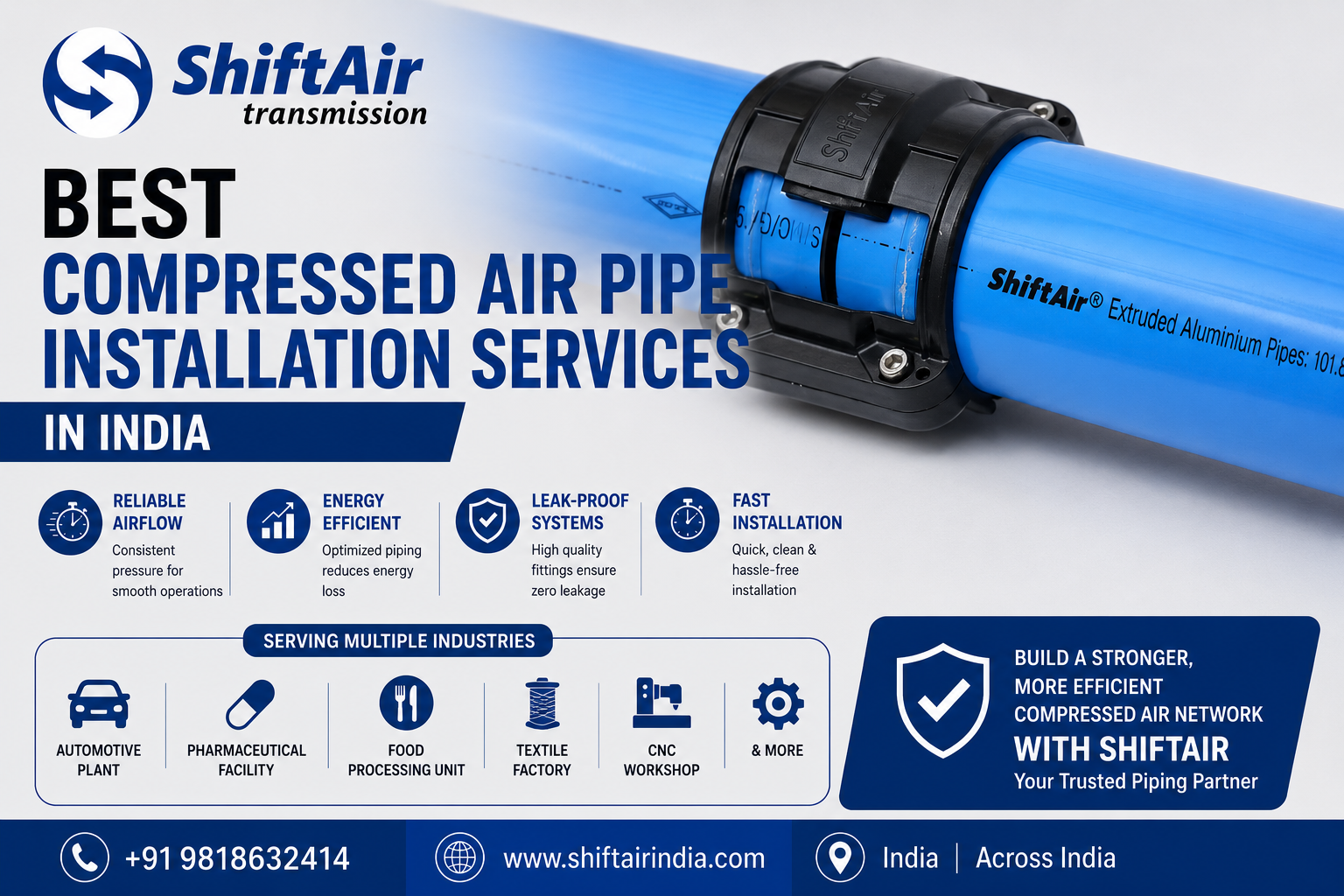
Compressed air is one of the most important utilities in modern manufacturing. Whether it is used for running pneumatic tools, automation systems, packaging lines, or CNC machinery, a reliable compressed air network is critical for smooth and efficient operations.
Many companies invest heavily in high-performance air compressors but often overlook the infrastructure responsible for distributing compressed air throughout the facility. However, even the best compressor cannot operate efficiently if the piping system experiences pressure loss, air leakage, or airflow restrictions.
This is why many Indian industries are switching from traditional GI and steel pipelines to aluminium compressed air piping systems, which offer improved airflow, reduced maintenance, faster installation, and significant energy savings. In fact, aluminium piping can reduce pressure drop by up to 30 per cent compared to conventional steel systems, delivering overall energy cost reductions of 15 to 25 per cent. Some facilities have reported saving 5 to 8 lakh rupees annually on electricity bills after converting to aluminium piping, making the investment quick to recover.
Manufacturers striving for greater productivity and lower operating costs are increasingly adopting aluminium compressed air piping systems as a key component of modern industrial infrastructure.
One often-overlooked function of a compressed air piping system is its role in overall system efficiency.
Much of the discussion surrounding compressed air equipment focuses on compressors, dryers, and filtration systems. However, the piping network is equally important in determining overall system performance.
Think of the piping system as a highway that carries compressed air from the compressor room to various production areas. If that highway is poorly designed, congested, or damaged, the entire system becomes inefficient.
Some of the common problems caused by poorly designed piping networks include:
- Pressure loss
- Air leaks
- Non-uniform flow distribution
- Increased compressor load
- Higher electricity consumption
These issues directly impact productivity, production efficiency, and operating costs.
A well-designed compressed air distribution system ensures that every machine receives the air pressure it requires while minimizing energy loss throughout the network.
Why Traditional Steel and GI Pipes Are Becoming Obsolete
GI and steel pipes have been widely used in industrial compressed air systems for decades. While they have served their purpose, modern manufacturing environments demand greater efficiency, reliability, and flexibility.
One of the biggest disadvantages of steel pipelines is internal corrosion. Rust buildup inside the pipe restricts airflow and increases pressure losses. The rough internal surface creates additional resistance, forcing compressors to work harder to maintain the desired operating pressure.
Rust contamination can also negatively affect air quality, which is a major concern for industries such as pharmaceuticals, food processing, electronics manufacturing, and precision engineering.
In addition, steel pipelines require welding, threading, and extensive maintenance, making future modifications expensive and time-consuming.
These limitations have encouraged industries to seek more efficient alternatives.
Aluminium is transforming industrial air distribution across India by providing a competitive advantage that traditional piping systems cannot match.
Aluminium has become one of the most effective materials for compressed air distribution systems.
Unlike steel, aluminium does not rust internally, keeping the airflow path clean and smooth throughout the system’s lifespan. This results in lower pressure drops, higher efficiency, and improved equipment performance.
Another major advantage is its lightweight construction. Aluminium pipes are significantly lighter than steel pipes, making them easier to transport, handle, and install. Most aluminium piping systems utilize simple mechanical fittings such as push-to-connect or clamp joints, eliminating the need for skilled welders or specialized tools.
Typical installation involves measuring and cutting the pipe, assembling sections using connectors, and securing the system with basic supports. This straightforward process allows maintenance teams to complete installations, modifications, and future expansions quickly and efficiently.
For industrial facilities, these advantages translate into:
- Faster installation
- Reduced labour costs
- Lower structural loading
- Easier future expansion
These practical benefits, combined with energy savings and reduced maintenance requirements, make aluminium piping an attractive solution for manufacturers seeking greater efficiency.
How Pressure Drop Affects Energy Costs
Pressure losses within compressed air networks often result in significant energy waste that goes unnoticed.
Pressure drop refers to the loss of compressed air pressure as it travels through the piping system. Common causes include:
- Rusted pipes
- Poor network design
- Excessive bends and curves
- Undersized piping
- Air leakage
Many facilities compensate for pressure loss by increasing compressor pressure settings. While this may solve the immediate problem, it also increases energy consumption and operating expenses.
To avoid unnecessary costs and maintain optimal efficiency, facilities should regularly monitor system pressure at key points throughout the network. Periodic pressure audits using portable gauges or digital monitoring tools can quickly identify hidden losses before they result in higher energy bills.
Installing permanent pressure monitoring devices allows continuous tracking, enabling maintenance teams to detect and address issues before they become major problems.
A well-designed aluminium piping system promotes smooth airflow and minimizes pressure drops, improving compressor efficiency and reducing electricity consumption.
Significance of Leak-Free Air Distribution
Air leakage is one of the most common causes of energy loss in industrial facilities.
Even small leaks can accumulate over time, leading to substantial energy waste. Many plants lose a significant portion of their compressed air due to leaking joints, damaged fittings, and aging pipeline infrastructure.
Modern aluminium piping systems use advanced connection technologies specifically engineered to minimize leaks, improving system reliability and reducing wasted energy.
Reducing air loss helps industries:
- Increase compressor efficiency
- Lower electricity bills
- Improve equipment performance
- Reduce maintenance requirements
Preventing leaks is one of the simplest and most effective ways to maximize the return on investment from a compressed air system.
How Modular Piping Systems Support Future Growth
Industrial plants are constantly evolving. New production lines, additional machinery, and process upgrades often require changes to the compressed air network.
With traditional steel piping systems, these modifications can be expensive and disruptive.
Aluminium piping systems are purpose-built for flexibility. Their modular design allows companies to expand, relocate, or modify air distribution networks quickly while minimizing downtime.
For example, a leading auto component manufacturer in Pune recently upgraded from steel to aluminium piping to support a new production line. Using modular fittings, the maintenance team completed the installation in just three days compared to the two weeks typically required for steel welding and threading.
Production downtime was reduced by more than 60 per cent, helping the company avoid costly delays and meet customer orders on schedule.
This flexibility enables manufacturers to respond rapidly to changing production requirements while protecting and enhancing their infrastructure investments.
Aluminium Compressed Air Pipe Applications by Industry
Many industries are adopting aluminium compressed air systems because they provide clean, reliable, and energy-efficient airflow for critical operations.
Pharmaceutical Industry
- Provides clean compressed air for critical manufacturing processes.
Food & Beverage Processing
- Maintains hygiene standards and reduces contamination risks.
Textile Industry
- Delivers a consistent airflow to high-speed production equipment.
CNC & Engineering Workshops
- Supports precision machining applications that require stable air pressure.
Why Industries Rely on ShiftAir
ShiftAir Transmission Pvt. Ltd. specializes in advanced aluminium compressed air piping systems that improve airflow efficiency, reduce pressure losses, and support modern industrial operations.
What differentiates ShiftAir is its proprietary connection technology, designed for leak-free performance, rapid modular installation, and enhanced corrosion resistance. The company also provides customized system design, onsite engineering support, and responsive after-sales service to ensure successful project execution from planning through maintenance.
ShiftAir offers:
- Aluminium compressed air piping
- Compressed air distribution networks
- Industrial pneumatic solutions
- System design and engineering support
- Installation and commissioning services
As a trusted partner in airflow optimization, ShiftAir helps industries reduce leaks, improve efficiency, maximize productivity, and lower long-term operating costs.
Conclusion
As industries continue to focus on energy efficiency, reliability, and operational excellence, the role of compressed air distribution networks has become increasingly important.
Aluminium compressed air piping systems address many of the challenges associated with traditional steel pipelines by reducing pressure drops, preventing leaks, and supporting future expansion.
For companies seeking to modernize their compressed air infrastructure, investing in a high-quality aluminium piping system is no longer just an option—it is a strategic decision that supports long-term productivity, sustainability, and business growth.