
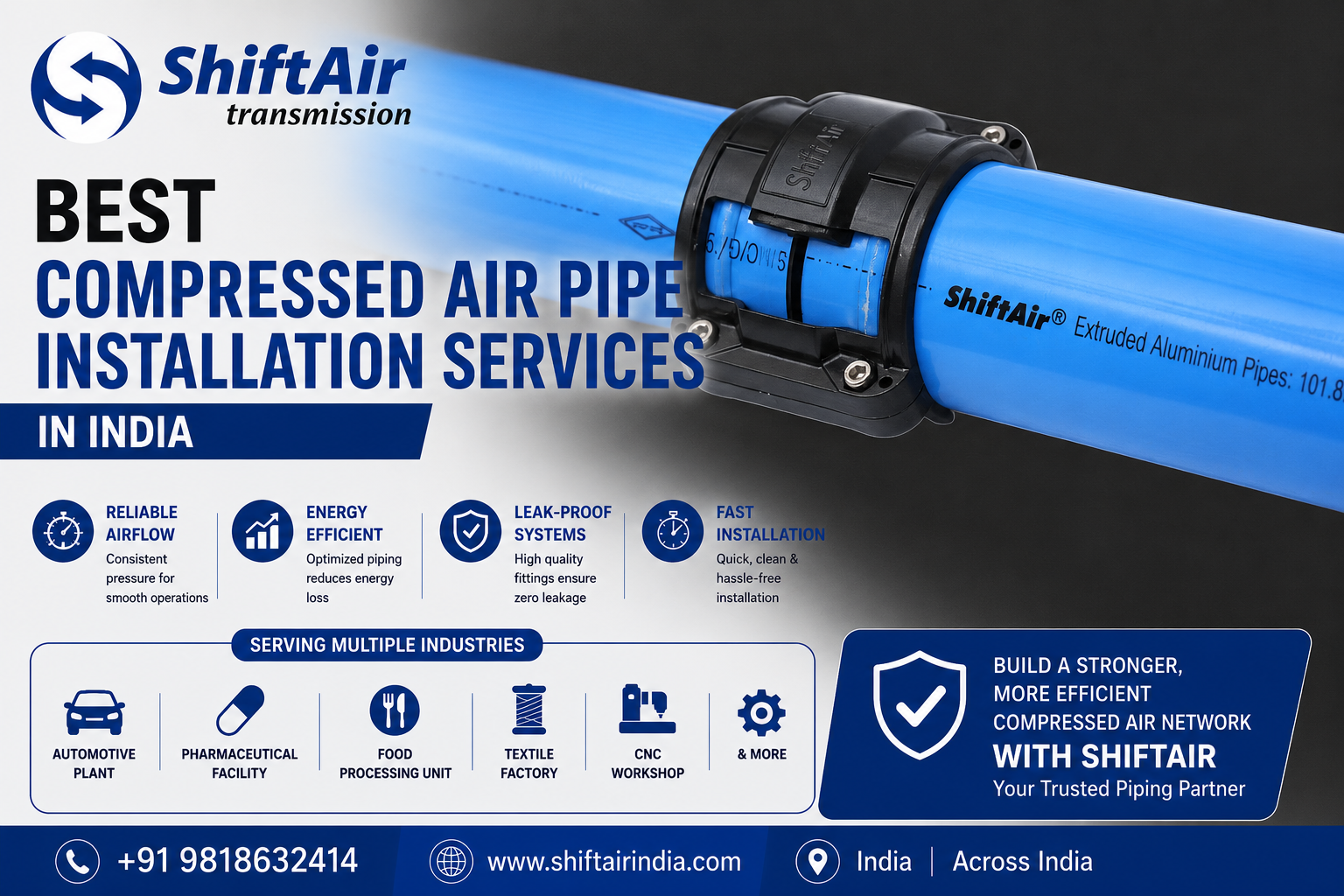
In most factories, compressed air is used every single day. It may be running pneumatic tools, packaging machines, cylinders, valves, cleaning lines, automation equipment, or production machines. Because it is so common, many teams treat compressed air like a normal utility.
But there is one part of the system that is often ignored: the compressed air piping system.
Many factories invest in a good compressor, but still face low pressure at the machine end. The compressor keeps running, electricity bills increase, and the production team keeps asking why the machines are not getting proper air. In many cases, the issue is not the compressor. The real problem is the piping layout, pipe material, leakage, bends, fittings, or pressure drop inside the air line.
A well-planned compressed air piping system helps compressed air move smoothly from the compressor room to every machine point. A poor system wastes energy, reduces pressure, increases maintenance problems, and affects production output.
For plant heads, maintenance managers, project engineers, and factory owners, understanding compressed air piping is important before installing a new line or upgrading an old one.
What Is a Compressed Air Piping System?
A compressed air piping system is the network of pipes, tubes, connectors, elbows, valves, and fittings that carries compressed air from the compressor to different machines and workstations inside a factory.
The compressor produces the air pressure, but the piping system decides how efficiently that pressure reaches the point of use.
A basic compressed air distribution system usually starts from the compressor room. The compressed air passes through an air receiver, dryer, filters, and then enters the main piping line. From there, it moves through branch lines and drop points to reach machines on the shop floor.
In simple words, the compressor is the source, and the piping system is the route. If the route is not properly designed, the air will not reach the machines with the right pressure and flow.
A good compressed air piping system should help the factory get:
- Stable air pressure at machine points
- Lower pressure drop
- Less air leakage
- Cleaner and drier air supply
- Better energy efficiency
- Easier maintenance
- Easy expansion when new machines are added
This is why compressed air piping should not be planned at the last minute. It should be treated as an important plant utility.
Main Components of a Compressed Air Piping System
A proper industrial compressed air piping setup includes several parts. Each part plays a role in maintaining pressure, air quality, and reliability.
Air Compressor
The air compressor is the heart of the system. It compresses atmospheric air and supplies it at the required pressure. However, even the best compressor cannot perform well if the air compressor pipe line is poorly designed.
If the pipe size is too small, the layout is too long, or there are too many bends, the compressor will work harder but the machine may still receive low pressure.
Air Receiver Tank
The air receiver tank stores compressed air and helps manage sudden changes in air demand. For example, when multiple machines start using air at the same time, the receiver helps maintain a more stable supply.
It also reduces frequent loading and unloading of the compressor.
Air Dryer and Filters
Compressed air usually contains moisture, dust, oil particles, and other impurities. If this air goes directly into the pipe line, it can damage machines, tools, valves, and pneumatic parts.
Dryers and filters help clean the air before it enters the compressed air piping system. This is especially important in industries like food processing, packaging, pharmaceuticals, electronics, printing, and automation.
Main Header Line
The main header line is the primary pipe that carries compressed air from the compressor room to the production area. This line must be sized properly because it handles the major air flow of the plant.
If the main line is undersized, the entire factory may face pressure drop issues.
Branch Lines
Branch lines carry air from the main header to different departments, machines, or workstations. These lines should be planned according to machine locations and air demand.
Random branch connections can create uneven pressure in different areas of the factory.
Drop Lines
Drop lines bring air from the overhead or main pipe line down to the machine connection point. These lines should be installed carefully so that moisture and dirt do not easily enter the machine.
Good drop line planning improves both air quality and machine safety.
Connectors, Elbows, Valves, and Fittings
Connectors, elbows, valves, and fittings are small parts, but they have a big impact on the system. Poor-quality fittings can create leakage. Too many elbows can create resistance. Incorrect valves can make maintenance difficult.
Using good-quality connectors, elbows, and valves helps keep the compressed air distribution system reliable and easy to service.
Where Factories Use Compressed Air Piping
Compressed air is used in many industries because it is flexible, safe, and suitable for different factory operations. A good industrial compressed air piping system is commonly used in:
- Automotive component factories
- Textile and garment units
- Food and beverage plants
- Packaging factories
- Pharmaceutical production units
- Plastic molding factories
- Electronics manufacturing
- Metal fabrication workshops
- Printing and paper industries
- General engineering plants
In these factories, compressed air may be used for pneumatic cylinders, air tools, spray systems, cleaning, machine operation, control valves, automation equipment, and material handling.
For example, in a packaging factory, compressed air may be used for sealing, cutting, labeling, filling, and moving products. If the pressure drops during production, the machine may slow down, reject products, or stop completely.
In a fabrication workshop, low air pressure can affect tool performance. In an automation line, unstable pressure can disturb timing and movement. In a food or pharma plant, poor air quality can create serious process issues.
This is why compressed air piping is not just a supporting system. It directly affects production speed, product quality, and machine uptime.
Why Pipe Material Matters
The material used in a compressed air piping system affects air flow, durability, installation time, maintenance, and long-term cost.
Many old factories still use traditional pipe materials such as mild steel or galvanized iron. These materials are strong, but they can become heavy, difficult to modify, and prone to corrosion over time.
When corrosion develops inside the pipe, it creates roughness. This rough inner surface increases friction and reduces air flow. Rust particles can also travel through the compressed air line and reach machines, filters, valves, and tools.
Modern factories are now moving towards aluminium alloy tubes for compressed air piping. Aluminium piping is lightweight, corrosion-resistant, and easier to install. It also has a smoother inner surface, which helps air move with less resistance.
This can help reduce pressure drop and improve energy efficiency.
Another major advantage is flexibility. If the factory layout changes or new machines are added, aluminium piping systems are usually easier to extend or modify compared to traditional heavy piping.
For growing factories, this is a practical benefit.
Common Design Mistakes in Compressed Air Piping
Many compressed air problems are created during the design and installation stage. Once the system is installed incorrectly, the factory may face pressure issues for years.
Using the Wrong Pipe Size
Pipe size is one of the most important factors in compressed air piping. If the pipe is too small, the air flow becomes restricted. The compressor may generate enough pressure, but the machine end may still receive less air.
This leads to pressure drop, poor tool performance, and higher compressor load.
Pipe sizing should be based on air demand, distance, pressure requirement, and future expansion plans.
Too Many Bends and Restrictions
Every bend, elbow, and restriction creates resistance in the air line. If the piping layout has too many sharp bends, air flow becomes less efficient.
A well-planned layout keeps the route simple, smooth, and practical.
Poor Layout Planning
Sometimes compressed air lines are installed only based on available space, not actual air demand. This creates long pipe routes, unnecessary bends, and uneven pressure across the factory.
Before installation, the team should study machine locations, air consumption, compressor position, maintenance access, and future expansion.
Ignoring Pressure Drop
Pressure drop is one of the biggest reasons for poor compressed air performance. It means the pressure reduces as air travels through the pipe, fittings, filters, valves, and machine connections.
A small pressure drop may be acceptable, but excessive pressure drop causes serious production problems.
If machines need 6 bar pressure but receive only 4.5 or 5 bar at the point of use, the machine may not perform properly. The usual reaction is to increase compressor pressure, but that increases energy cost.
The better solution is to correct the piping system.
Air Leakage
Compressed air leakage is a hidden cost in many factories. Small leaks from joints, fittings, valves, or old pipes may look minor, but they waste air continuously.
Since compressed air is generated using electricity, every leak means wasted power.
A leak-free piping system can reduce unnecessary compressor running and improve plant efficiency.
No Planning for Future Machines
Many factories install compressed air piping only for current requirements. Later, when new machines are added, the same line is extended again and again.
This overloads the system and creates pressure problems.
A good compressed air piping system should always consider future expansion.
When Should a Factory Upgrade Its Compressed Air Piping System?
A factory should review its compressed air piping system when production demand increases, machines are added, or pressure problems become frequent.
You may need to upgrade your system if:
- Machines are not getting proper air pressure
- Compressor runs continuously but demand is still not met
- There is frequent air leakage
- Old pipes show rust or corrosion
- Moisture or dust is reaching machines
- New machines are being added
- Pressure is different in different areas
- Energy bills are increasing
- Existing pipe lines are difficult to modify
- Production teams complain about slow machine response
Upgrading does not always mean changing the full system. Sometimes, replacing old pipe sections, improving the layout, correcting pipe size, adding proper valves, or shifting to aluminium alloy tubes can improve performance.
A site visit can help identify where the air loss is happening and what changes are actually required.
How a Good Compressed Air Piping System Improves Productivity
Compressed air is expensive to generate. When air leaks or pressure drops, the compressor has to work harder. This increases electricity consumption and reduces compressor life.
A good compressed air piping system improves productivity in several ways.
First, it helps maintain stable pressure at machine points. Stable pressure means machines can run smoothly without frequent stoppages.
Second, it reduces energy waste. When the pipe line is properly sized and leakage is controlled, the compressor does not need to overwork.
Third, it improves maintenance. With proper valves and layout, maintenance teams can isolate one section without shutting down the entire plant.
Fourth, it supports future expansion. When a factory adds new machines, a well-planned compressed air distribution system can be extended more easily.
For factory teams, this means fewer breakdowns, less production disturbance, better machine performance, and lower operating cost.
How ShiftAir Can Support Your Compressed Air Piping Requirements
ShiftAir supports factories with practical compressed air piping solutions for new installations, upgrades, and layout improvements.
Instead of only supplying products, ShiftAir helps factory teams understand the actual air requirement, machine locations, pressure drop points, and future expansion needs.
ShiftAir can support with:
- Factory site visits
- Compressed air piping layout support
- Aluminium alloy tubes
- Connectors and elbows
- Valves and fittings
- Air distribution planning
- Pressure drop guidance
- New compressed air pipe line installation
- Existing system upgrade support
For factories facing pressure drop, leakage, or machine-end air issues, a proper piping review can make a major difference.
ShiftAir’s aluminium alloy compressed air piping products are designed to help factories build cleaner, stronger, and more efficient air distribution systems.
Whether you are setting up a new factory, adding new machines, or replacing an old pipe network, the right piping system can help reduce energy loss and improve production reliability.
Conclusion
A compressed air piping system is more than just a pipe line. It is an important part of factory performance.
The compressor may produce the air, but the piping system decides whether that air reaches the machines properly. If the pipe line is poorly designed, the factory may face pressure drop, leakage, machine stoppage, high electricity cost, and maintenance issues.
For plant heads and maintenance managers, the right approach is to plan compressed air piping before problems start. Pipe material, pipe size, layout, fittings, valves, and future expansion should all be considered.
A well-designed compressed air distribution system helps improve productivity, reduce energy waste, and support smooth factory operations.
If your factory is planning a new compressed air piping system or facing pressure drop in an existing air line, ShiftAir can help with site visits, piping layout support, and aluminium alloy piping solutions.
Book a ShiftAir site visit today or request compressed air piping layout support for your factory.
FAQs About Compressed Air Piping Systems
What is a compressed air piping system?
A compressed air piping system is a network of pipes, tubes, connectors, valves, elbows, and fittings that carries compressed air from the compressor to machines and workstations inside a factory.
What is the best material for compressed air piping?
Aluminium alloy tubes are a strong option for modern compressed air piping because they are lightweight, corrosion-resistant, easy to install, and support smooth air flow with lower pressure drop.
How long does compressed air piping installation take?
Installation time depends on the factory size, number of machine points, pipe length, layout complexity, and material used. A small installation may take a few days, while a larger plant may need phased installation.
What causes pressure drop in compressed air piping?
Pressure drop can happen because of undersized pipes, long pipe runs, too many bends, poor fittings, clogged filters, leakage, or incorrect piping layout.
When should a factory upgrade its compressed air piping system?
A factory should consider upgrading when machines face low pressure, air leakage increases, pipes become old or corroded, new machines are added, or compressor energy consumption becomes too high.