
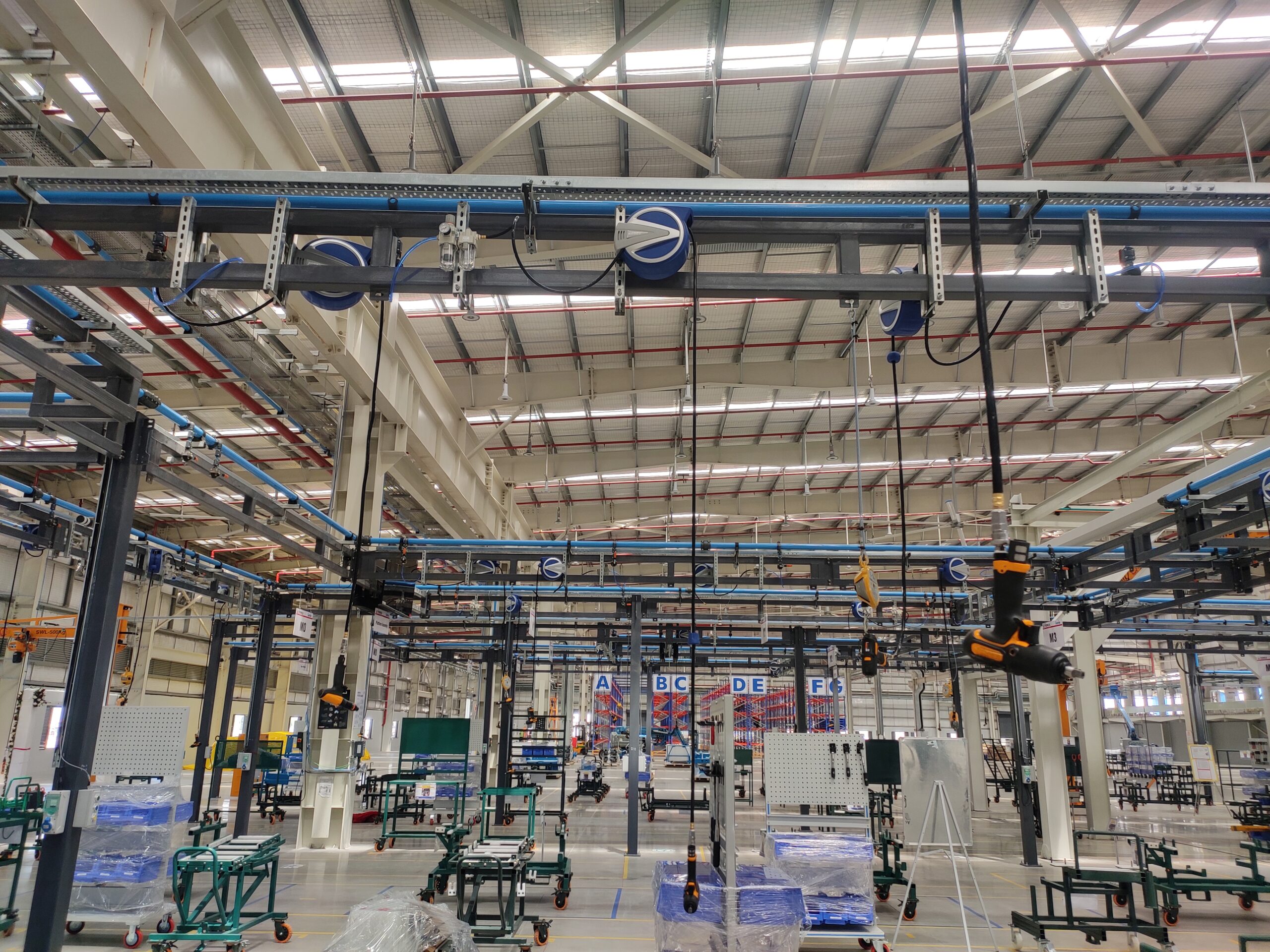
When you walk onto a factory floor, the air compressor is usually the star of the utilities—powerful, critical, and costly. But what about the network of pipes that quietly delivers compressed air from the compressor room to every corner of your facility? In most Indian plants, people rarely pay much attention to this piping, but it can quietly drain resources each and every shift.
For years, galvanized iron (GI) pipes became the go-to for compressed air systems. They’re familiar, easy to source, and relatively inexpensive. Sometimes, PVC pipes get used (often for their bargain cost and easy installation). But in practice, both options are far from ideal for compressed air. GI is slowly eaten from the inside by corrosion; PVC can fail abruptly and dangerously. Only aluminium piping tackles the underlying problems, rather than just masking symptoms.
This guide will show—with real-world engineering numbers, not sales jargon—why aluminium piping is needed for compressed air systems in India.
The Root Problem: Compressed Air Is Wet, Hot, and Aggressive
It’s a myth that compressed air is “clean.” The reality is that compressed air carries condensation, heat, and even tiny traces of oil. When these travel through GI or mild steel pipes, trouble starts soon after installation:
- The zinc coating inside GI (which is supposed to prevent rust) cannot withstand the aggressive mix of water and oil forever; within just 3–5 years it starts breaking down.
- Rust and scale buildup begins, and the bore gradually narrows by 15–25% over a single decade.
- As the pipe gets rough inside, friction increases, causing turbulent airflow and extra pressure drops.
- Your compressor must work even harder (and cost more to run) just to supply the pressure your machines need.
- Over time, rust flakes break off and damage downstream filters, pneumatic cylinders, and solenoid valves—often leading to ongoing maintenance headaches and production interruptions.
Aluminium, on the other hand, doesn’t rust at all. Its surface stays smooth for the entire lifespan of the installation. That means the air quality and pressure you designed for when the pipe was brand-new are exactly what you’ll have years down the line.
The Engineering Case for Aluminium Piping
1. Lower Pressure Drop Means Bigger Electricity Savings
One of the biggest hidden costs in compressed air systems is energy consumption. When pipes are corroded or rough inside, air can’t flow smoothly. The practical rule across the industry is clear:
- For every 1-bar increase in pressure drop, your compressor’s energy use jumps by about 7–7.5%.
For the average Indian factory, where power rates hover between ₹10–11 per kWh, that’s far from trivial. If you have a 250 kW compressor running 6,000 hours a year, even a small extra pressure drop from old GI pipes could mean lakhs in avoidable electricity costs annually.
Aluminium pipes don’t just start smoother, they stay that way. Systems like ShiftAir’s use 6063-T5 seamless extruded pipes that maintain full bore over time—eliminating the creeping losses seen in GI.
2. Modular Installation Slashes Downtime and Labor Costs
Modifying or extending GI piping is a project: you cut, thread, seal, and sometimes weld on-site. That means experienced fitters, special tools, extra permits, and hard-to-reverse permanent joints.
Aluminium systems are modular—they use clamp-type fittings that come together quickly, with no welding, threading, or glue required.
- Skilled installers can complete 2–4 times more aluminium piping per day compared to GI.
- In one documented case, an aluminium system was finished in just 35 minutes, versus 1 hour 19 minutes for a similar GI system—a 66% time saving.
- ShiftAir installations are “ready-to-use” in less than half the time of GI.
For plants that can’t afford to shut production for long, this speed is a game-changer.
3. Your Air Network Grows With You
Factories change. New machines are added, layouts are tweaked. With welded or threaded GI, even minor changes demand cutting into existing pipes and complicated re-threading—often making the air system a maintenance nightmare.
Aluminium’s modular, mechanical fittings allow easy expansion, relocation, or reconfiguration. Adding a new drop point doesn’t mean a total overhaul—it’s a simple extension, keeping costs low and flexibility high. In fact, most Indian SMEs change layouts far more often than their GI piping can handle.
4. Fewer Leaks, Better Sealed Joints
Ask any maintenance team—the number one cause of wasted compressed air is leaks, and almost all leaks form at joints. GI has a threaded joint at every length, multiplying the risk with every added meter.
Aluminium systems use radial-sealing mechanical joints (with high-performance NBR seals) that are far less prone to leaks—even under vibration or thermal changes. That means fewer headaches, less wasted energy, and no constant cycle of leak patching and re-threading.
5. Cleaner Air at the Point of Use
In quality-sensitive industries (like pharma, food, electronics, and precision manufacturing), rusty or contaminated air isn’t just inefficient—it can threaten compliance, product quality, or even safety.
GI slowly sheds rust flakes into the air stream, while aluminium stays clean. ShiftAir systems even comply with ISO 8573-1:2010 for air quality—making the pipe part of your air treatment setup.
Which ISO 8573-1 Air Quality Class Do You Actually Need?
If your pipe is corroding, you can never consistently achieve high-purity air, no matter how good your dryers are. Here is what different industries typically require:
- Class 1 & 2 (Critical): Required for Pharmaceuticals, Food & Beverage, and Electronics. Any trace of rust or oil can ruin a batch or cause a compliance failure.
- Class 3 & 4 (General): Acceptable for general manufacturing, packaging, and instrument air where minor moisture or particulates won’t affect the end product.
6. Lightweight for Safer, Simpler Installation
Aluminium pipe weighs a fraction of GI or steel pipe. That reduces load on building supports and makes high or tricky installations faster, safer, and easier on your team.
What NOT to Use: PVC and CPVC
Never use PVC or CPVC for compressed air. This isn’t just a best practice—it’s a regulatory ban.
- OSHA and ASME codes very clearly state PVC/CPVC are not allowed for compressed air systems, as they fail in a brittle manner.
- When they go, PVC pipes shatter explosively, sending shards across the workspace. There are documented cases of worker injuries from flying PVC fragments.
- Temperature swings and air-tightness are also serious concerns.
If your plant has any PVC on a compressed air line, it’s a ticking hazard—not a piping decision.
GI is not prohibited, but it brings serious long-term costs: pressure drop, leaks, and ongoing fix-it work. For a new plant or when expanding, aluminium is the default, engineering-approved choice.
At-a-Glance: Aluminium vs GI vs PVC
| Property | ShiftAir Aluminium Piping | GI / Mild Steel | PVC / CPVC |
|---|---|---|---|
| Internal corrosion | None (self-protecting oxide layer) | Rusts and scales fast | Not applicable—degrades |
| Pressure drop over years | Stays low and stable | Rises 15–25% over time | Deforms or fails outright |
| Installation method | Push-fit/clamp, no hot work | Thread/weld, laborious | Solvent cement (not allowed) |
| Installation speed | 50% faster than GI | Baseline | Fast, but unsafe |
| Leak risk | Low (strong mechanical joints) | High (threaded joints) | Catastrophic, shattering |
| Max. working pressure | 15 bar, burst tested to 60 bar | Varies | Prohibited by OSHA/ASME |
| Warranty | 10 years | 1 year (at best) | Not rated for air |
| Best use | All new/retrofit air systems | Old, low-risk utilities | Never for compressed air |
The 5 Hidden Costs of Staying with a GI Pipe Network
If you are still using GI pipes, you are paying for them long after the initial invoice is cleared. Here is where the hidden money goes:
- The Energy Penalty: As the bore narrows, your compressor works harder. Every 1 bar of extra pressure drop can add 7% to your electricity bill.
- Leak Repair Labor: The constant cycle of searching for leaks, applying thread tape, and re-threading joints eats up valuable maintenance hours.
- Downtime for Modifications: Cutting and welding steel means shutting down the line. You lose production time every time a new machine is added.
- Air Treatment Overload: Rust flakes clog your dryers and inline filters, forcing you to replace filter elements far more often than necessary.
- Premature Tool Failure: Contaminated air damages pneumatic cylinders and solenoid valves, leading to expensive premature replacements.
Critical Design Rules for a Leak-Free Aluminium Air Network
Even the best piping material will underperform if the system isn’t designed correctly. Here are the engineering rules our team at ShiftAir uses to guarantee optimal performance:
1. The Temperature Derating Factor (Safety Critical)
While ShiftAir aluminium pipes are rated for 15 Bar at 70°C, it is critical to understand temperature derating. Compressed air exiting the compressor is hot. If your aftercooler is undersized or the piping run is short, the pipe may see temperatures above 45°C. Always ensure your system operates within the -20°C to 70°C range. Unlike competitors who blindly claim “high pressure,” we engineer systems that are safe for your specific thermal load.
2. The 1% Slope Rule
Compressed air generates condensate. All horizontal mains must be installed with a 1% slope in the direction of airflow. This ensures that water doesn’t pool in the pipe, which can cause blockages or enter your pneumatic tools.
3. Strategic Drain Points
Install automatic drain traps at all low points, drip legs, and at the end of the main header. A well-designed system has no low spots without a drain.
4. Expansion Loops
Aluminium expands and contracts with temperature changes. Every 50 meters of straight run needs an expansion loop or a flexible connection to prevent stress on the joints and potential failures.
5. Velocity Limits
To prevent excessive pressure drop and noise, air velocity should never exceed 6 m/s in header mains and 10 m/s in branch lines. If your pipe is undersized, friction will rob your system of pressure.
What Makes ShiftAir Stand Out?
Not every aluminium piping system is the same. Many “hybrid” setups have aluminium pipe but bulkier plastic, brass, or mismatched fittings. ShiftAir is a Make-in-India pioneer of an all-aluminium clamp-type connection system covering all sizes from 20–250 mm.
Features include:
- Pressure die-cast Grade-A383 aluminium clamps
- Stainless steel (SS304) gripping rings
- Cross-linked NBR flat seals
- No welding, threading, or glue needed
ShiftAir offers two engineered connection technologies:
- Ring Clamp Connection (20–40 mm): Cold-worked steel gripping rings guarantee tough joints and active, leak-free concentric sealing.
- Lugged Clamp Connection (50–250 mm): Pipes are groove-fitted via cold deformation for secure, high-reliability joints on larger industrial mains.
Certifications and Warranty:
- Fully certified: ISO 9001:2015, CE, TUV, UL, RoHS, ASME B31.1/31.3
- Works safely from -20°C to 70°C
- 10-year warranty on all aluminium piping and fittings
Proof in the Field: How Aluminium Piping Saved an Indian Textile Mill ₹8 Lakhs Annually
A large textile spinning mill in Western India was experiencing severe pressure drops at the end of their 400-meter ring main. Their 250 kW compressor was running at maximum pressure, yet pneumatic actuators on the looms were failing.
After a system audit, the culprit was identified: internal corrosion in their 15-year-old GI piping had reduced the effective bore by nearly 20%, and multiple threaded joints were leaking.
The ShiftAir Solution: We replaced the main header with a 110mm ShiftAir all-aluminium modular system.
- Result 1: Pressure drop was reduced by 0.4 bar, allowing the compressor to run at a lower setpoint. Energy consumption dropped by roughly 3%.
- Result 2: Zero leaks at joints, eliminating the weekly maintenance calls for pipe patching.
- Result 3: The installation was completed over a weekend without halting production, thanks to the clamp-type fittings.
Frequently Asked Questions (FAQs)
Can I use PVC pipe for compressed air?
No. OSHA and ASME strictly prohibit PVC and CPVC for compressed air. They fail in a brittle manner and can shatter explosively, posing a severe safety hazard to workers.
What is the maximum working pressure of ShiftAir aluminium piping?
ShiftAir aluminium piping systems have a maximum working pressure of 15 Bar at 70°C, and are burst-tested up to 60 Bar. They are safe for vacuum applications down to 15 mbar.
How long does a ShiftAir aluminium piping system last?
Aluminium does not rust, meaning it has a much longer lifespan than GI pipe. ShiftAir is so confident in its material quality that we offer a 10-Year Warranty on all aluminium piping and fittings against manufacturing defects.
How fast is aluminium piping installed compared to GI pipe?
Because aluminium uses modular clamp-type fittings without welding or threading, installation is roughly 50% faster than GI pipe, drastically reducing plant downtime.
Conclusion: Aluminium Is Not a Luxury—It’s the Baseline
If your plant still pipes compressed air through GI, you’re quietly losing money each month through corrosion, leaks, pressure drops, and maintenance headaches. PVC is worse—a safety risk that overshadows any cost advantage.
Aluminium piping solves the true causes of inefficiency in air systems: internal corrosion, joint failures, rising pressure drops, and inflexible layouts. For Indian manufacturers striving for lower costs, better quality, and more uptime, modular aluminium piping isn’t a “nice-to-have” anymore—it’s the new normal for systems built to last.
ShiftAir India leads this change with modular, high-efficiency, made-for-India aluminium compressed air piping. Our engineering team can review your plant and run an Energy Saving (ROI) Calculator to show exactly how soon you’ll recoup your investment.