
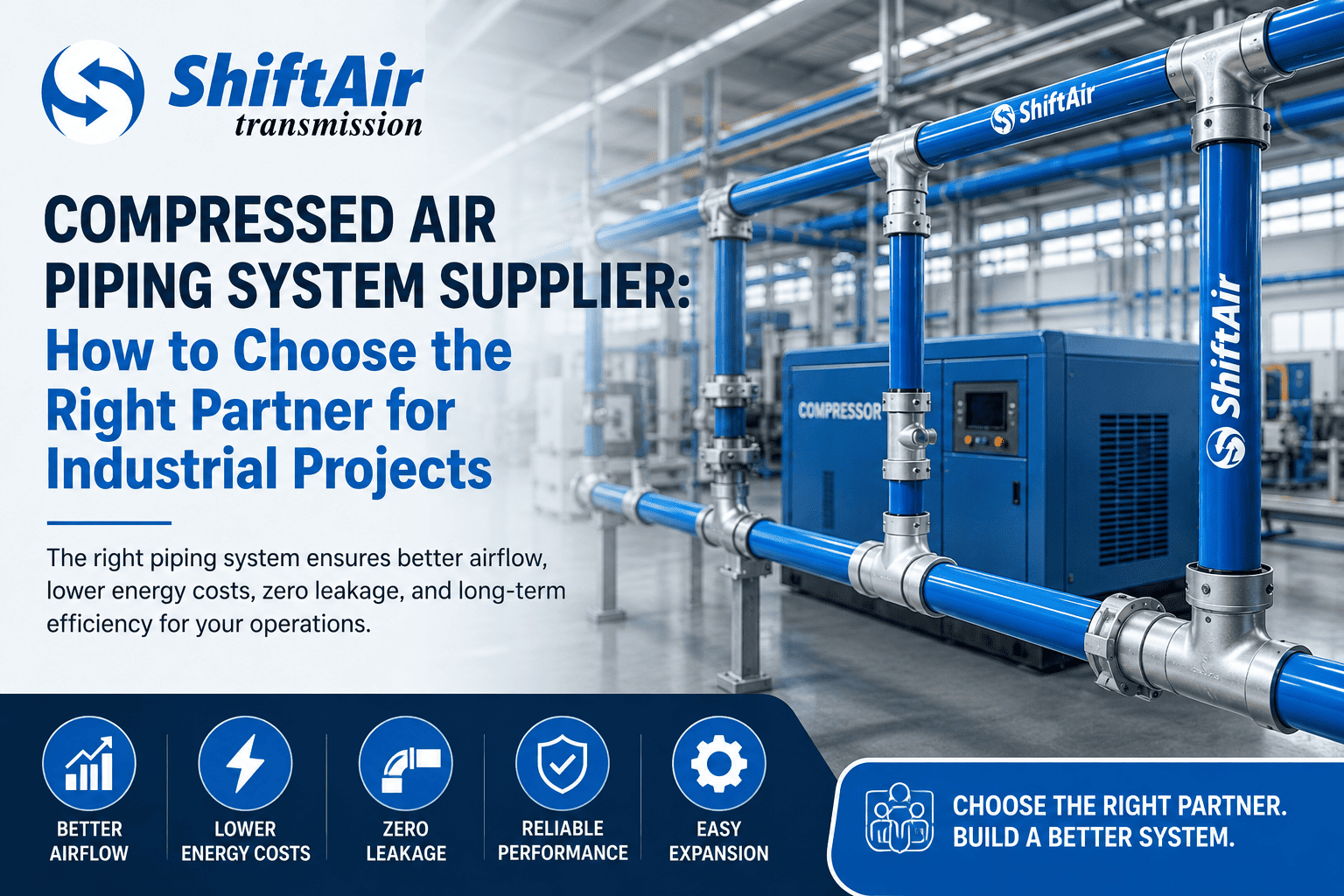
In most industrial plants, compressed air works quietly in the background, but its role is extremely important. It powers pneumatic tools, automation lines, packaging machines, CNC equipment, valves, actuators, cleaning systems, and many other production applications. This is why compressed air is often called the fourth utility of modern manufacturing.
Industries such as automotive, pharmaceuticals, food processing, textiles, electronics, packaging, and engineering workshops depend on a steady and efficient compressed air supply every day. But one important point is often overlooked: the performance of a compressed air system does not depend only on the compressor. It also depends heavily on the piping network that carries the air from the compressor room to every point of use.
A good compressor connected to a poor piping system will never deliver its full value. If the pipeline is undersized, badly routed, leaking, corroded, or poorly installed, the plant may face pressure drop, high energy bills, unstable machine performance, and frequent maintenance problems.
This is why choosing the right compressed air piping system supplier is an important decision for every industrial project. A reliable supplier does more than provide pipes and fittings. The right partner helps you design a practical, efficient, expandable, and long-lasting compressed air distribution system.
Why the Right Compressed Air Piping System Supplier Matters
A compressed air network is not just a simple line of pipes. It is a complete system where every pipe, fitting, valve, connector, bend, drop point, and support arrangement affects final performance. Even small design mistakes can create long-term losses.
For example, if the pipe size is too small, the air will face resistance. If there are too many bends, pressure loss will increase. If fittings are of poor quality, leakage may start after some time. If the layout does not consider future expansion, the company may need costly modifications later.
An experienced compressed air piping system supplier studies the complete plant requirement before recommending a solution. This includes air demand, compressor capacity, machine locations, operating pressure, future expansion plans, pipe routing, safety requirements, and maintenance access.
The right supplier helps industries achieve:
- Better airflow throughout the plant
- Lower pressure drop from compressor to point of use
- Reduced air leakage and energy wastage
- Cleaner and more reliable compressed air distribution
- Faster installation with minimum production disturbance
- Easy expansion when new machines or production lines are added
- Lower maintenance cost over the life of the system
In simple words, the supplier you choose directly affects plant efficiency, electricity consumption, maintenance workload, and long-term operating cost.
The Hidden Cost of Poor Compressed Air Pipeline Design
Many factories still use old GI or mild steel piping because the initial cost looks lower. At first, this may appear like a budget-friendly decision. But after a few months or years, the hidden costs start showing in the form of pressure loss, air leakage, rust, repeated repairs, and higher compressor load.
These problems are not always visible immediately. A plant may continue running, but the compressor may be consuming extra electricity every day to overcome losses inside the piping network. Over time, this becomes a major expense.
1. Pressure Drop
Pressure drop happens when compressed air loses pressure while travelling through the pipeline. It may happen due to rough internal pipe surfaces, corrosion, wrong pipe sizing, long pipeline routes, unnecessary bends, or poor fittings.
When pressure drops before reaching the machine, operators often increase compressor pressure to compensate. This may solve the problem temporarily, but it also increases electricity consumption. A properly designed piping system helps maintain pressure more efficiently without putting unnecessary load on the compressor.
2. Air Leakage
Air leakage is one of the biggest sources of energy wastage in compressed air systems. Leaks commonly appear at threaded joints, old pipe sections, corroded areas, loose fittings, and poorly installed connections.
Every leak means the compressor is producing air that is not being used for production. This wastes energy and increases operating cost. A professional compressed air pipe manufacturer or supplier focuses on leak-resistant connection technology, proper installation practices, and reliable fittings to reduce such losses.
3. Frequent Maintenance
Traditional steel and GI pipelines often require repeated repairs due to rust, joint leakage, scaling, and pipe damage. In continuous production facilities, every repair can disturb plant operations. Maintenance teams may spend valuable time fixing recurring pipeline issues instead of focusing on preventive improvement.
A modern piping solution reduces this burden by offering better material performance, cleaner internal surfaces, and easier modification when required.
What to Look for in an Industrial Air Compressor Piping Solutions Provider
Not every piping supplier has the same technical capability. Some suppliers may only provide products, while others offer complete support from design to installation and after-sales service. For industrial projects, it is always better to choose a partner who understands both the product and the application.
1. Engineering Knowledge
A reliable industrial air compressor piping solutions provider should be able to support you with pipe sizing, airflow calculations, pressure drop analysis, layout planning, and network optimisation.
This engineering support is important because every plant has different air consumption patterns. A general layout may not work for all industries. The supplier should understand where air is required, how much pressure is needed, and how the network should be designed for smooth distribution.
2. Proper Site Survey
A good supplier will not recommend a system without understanding the site. A proper site survey helps identify compressor location, machine points, existing pipeline condition, air demand, future expansion areas, and possible routing challenges.
This step helps avoid mistakes during installation and ensures the final system is practical for daily plant use.
3. Installation Experience
Even the best piping material can fail to perform well if installation is poor. Proper installation ensures strong connections, correct alignment, safe support, minimum leakage, and easy maintenance access.
Experienced suppliers can also plan installation during scheduled shutdowns, weekly off days, or low-production periods. This helps reduce disruption and allows the plant to continue operations with minimum disturbance.
4. Product Quality
Product quality should never be ignored. Industrial buyers should check material strength, pressure rating, corrosion resistance, connection technology, fitting quality, and overall durability before selecting a piping system.
A dependable supplier should provide products suitable for industrial use and long-term service, not just low-cost components that may create problems later.
5. Future Expansion Support
Manufacturing plants change over time. New machines may be added, production lines may shift, and capacity may increase. A good compressed air piping system should allow future expansion without major disturbance.
This is one of the main reasons industries prefer modular piping systems. They make it easier to add new branches, modify routes, or extend the system when the plant grows.
6. After-Sales Support
The relationship with the supplier should not end after installation. A professional partner should provide technical guidance, maintenance support, spare parts availability, troubleshooting help, and system upgrade assistance whenever required.
Good after-sales support gives plant managers confidence that they can get help when the system needs inspection, modification, or expansion.
Warning Signs to Avoid While Choosing a Supplier
Selecting the wrong supplier can lead to poor performance, repeated maintenance, project delays, and unnecessary expenses. Before finalising a compressed air piping system supplier, pay attention to warning signs.
Be careful if a supplier:
- Does not offer a proper site survey
- Gives only a vague or generic proposal
- Avoids technical questions about pressure drop or airflow
- Cannot explain pipe sizing clearly
- Does not share previous project experience
- Cannot provide industrial client references
- Offers very low prices without explaining product quality
- Does not discuss future expansion requirements
- Provides poor communication during the inquiry stage
- Has limited installation or commissioning support
A good supplier should be transparent, technically confident, and willing to guide the customer properly. If the supplier avoids details at the beginning, it may become difficult to get reliable support later.
Why Aluminium Compressed Air Piping Systems Are Replacing GI Pipes
Industries across India are now moving from traditional GI and MS pipelines to aluminium compressed air piping systems. The reason is simple: aluminium piping offers better long-term performance, cleaner airflow, faster installation, and lower maintenance.
1. Corrosion-Free Performance
GI and steel pipes can rust internally over time, especially when moisture is present in the compressed air system. Internal rust can contaminate the air and reduce the effective pipe diameter.
Aluminium does not rust internally like GI piping. This helps maintain cleaner airflow and supports better air quality, which is especially important for pharmaceutical, food processing, electronics, packaging, and precision manufacturing applications.
2. Better Airflow Efficiency
Aluminium pipes have a smooth internal surface. This allows compressed air to move with less resistance. As a result, pressure drop is reduced and the compressor can operate more efficiently.
Better airflow means machines receive more consistent pressure, production becomes more stable, and the compressor does not need to work harder than necessary.
3. Faster and Cleaner Installation
Modular aluminium piping systems are lightweight and easy to handle. They do not require heavy welding or threading like conventional steel systems. This makes installation faster, cleaner, and more convenient for active industrial facilities.
Faster installation also means reduced labour time and less production downtime, which is a major advantage for busy manufacturing units.
4. Lower Lifetime Cost
Aluminium piping may have a higher initial cost compared to traditional GI piping, but the long-term benefits can make it more economical. Lower pressure drop, reduced leakage, less maintenance, faster installation, and longer service life help reduce total operating cost.
For many plants, the real saving is not only in the pipe cost. The bigger saving comes from improved energy efficiency, fewer shutdowns, easier expansion, and reduced maintenance work.
Industries That Benefit from Efficient Compressed Air Distribution
A well-designed compressed air distribution system is valuable for almost every manufacturing sector. However, some industries depend on compressed air more heavily because air quality, pressure stability, and reliability directly affect production.
Automotive Manufacturing
Automotive plants use compressed air for assembly tools, robotic systems, paint booths, lifting equipment, material handling, and testing operations. A stable air network helps maintain production speed and tool performance.
Pharmaceutical Industry
Pharmaceutical facilities require clean and reliable compressed air for packaging, processing equipment, and controlled manufacturing areas. Corrosion-free aluminium piping helps reduce contamination risks and supports cleaner distribution.
Food Processing
In food processing plants, compressed air may be used for packaging, conveying, cleaning, filling, and machine operation. A clean piping system supports better hygiene and helps maintain product quality.
Textile Industry
Textile plants use compressed air in weaving, spinning, cleaning, and machine operation. Consistent air pressure helps avoid production interruptions and supports smooth machine performance.
Electronics and Packaging Units
Electronics and packaging industries need stable, clean, and dry compressed air for sensitive equipment. A good piping system helps protect machines and maintain reliable output.
Engineering and CNC Workshops
CNC machines and engineering workshops need compressed air for tool operation, clamping, cleaning, and automation. Proper piping ensures steady pressure across multiple machines and reduces pressure fluctuation during peak use.
Why ShiftAir Is a Trusted Compressed Air Piping System Supplier in India
ShiftAir Transmission Pvt. Ltd. provides industrial compressed air piping solutions designed to improve airflow, reduce energy losses, support plant expansion, and make maintenance easier. The company focuses on practical engineering, quality products, and reliable project support.
ShiftAir understands that every industrial facility is different. A small engineering workshop, a large automotive plant, and a food processing unit cannot use the same standard piping layout. Each site needs a solution based on actual air demand, machine placement, pressure requirement, and future growth.
ShiftAir provides support for:
- Aluminium compressed air piping systems
- Compressed air distribution networks
- Pneumatic piping solutions
- Industrial air compressor piping solutions
- Compressed air pipeline design
- Site survey and layout planning
- Installation and commissioning services
- System modification and expansion support
- After-sales service and technical guidance
By focusing on pressure control, airflow efficiency, reliable fittings, and modular system design, ShiftAir helps industries build compressed air networks that are efficient, clean, and ready for future requirements.
How to Choose the Right Supplier: A Simple Checklist
Before selecting a compressed air piping system supplier, plant managers and project teams should evaluate the supplier carefully. A little attention before finalising the vendor can save a lot of cost and trouble later.
- Ask for a site visit: A serious supplier should be willing to understand your plant before giving a final recommendation.
- Check technical understanding: Ask about pipe sizing, pressure drop, air demand, and future expansion.
- Review product quality: Check pipe material, fittings, pressure rating, and connection system.
- Ask for previous project experience: A supplier with industrial experience can handle practical site challenges better.
- Compare proposals carefully: Do not compare only price. Compare design, scope, material, installation support, and service.
- Check after-sales support: Make sure the supplier can support you after installation for maintenance, spare parts, and expansion.
- Plan for the future: Choose a system that can grow with your plant instead of becoming a limitation later.
Conclusion
Choosing the right compressed air piping system supplier is not a small purchase decision. It is a long-term investment in plant efficiency, energy saving, machine performance, and production reliability.
A poorly designed piping system can silently increase electricity bills, create pressure problems, cause air leakage, and increase maintenance work. On the other hand, a properly designed aluminium compressed air piping system can improve airflow, reduce pressure drop, support cleaner air distribution, and make future expansion easier.
As industries continue to modernise, the demand for efficient and reliable compressed air distribution systems will keep growing. Aluminium piping systems, professional design support, and experienced installation partners are becoming the preferred choice for manufacturers who want better performance and lower lifetime cost.
If you are planning a new compressed air network or want to upgrade an old GI or steel pipeline, ShiftAir Transmission Pvt. Ltd. can help you build a system that is practical, efficient, durable, and ready for future industrial growth.
FAQs
What does a compressed air piping system supplier do?
A compressed air piping system supplier provides pipes, fittings, connectors, design support, installation services, and system optimisation for industrial compressed air networks.
Why is aluminium piping better than GI piping for compressed air?
Aluminium piping is corrosion-resistant, lightweight, clean from the inside, quick to install, and offers lower pressure drop compared to traditional GI piping.
How does pressure drop affect compressor performance?
Pressure drop forces the compressor to work harder to deliver the required pressure at the machine end. This increases energy consumption and reduces overall system efficiency.
Which industries use aluminium compressed air piping systems?
Automotive, pharmaceutical, food processing, textile, electronics, packaging, CNC, and general manufacturing industries commonly use aluminium compressed air piping systems.
How can industries reduce compressed air energy costs?
Industries can reduce energy costs by improving pipeline design, fixing air leaks, reducing pressure drop, selecting the right pipe size, and using efficient compressed air distribution systems.